
45 min
The year started out rough…
Three ski trips, a Philly trip, and a Cuba trip were all delayed, shortened, or cancelled. It was the Ides of March.
One of the cancelled ski trips (due to a record shortage of snowfall) was a family ski trip to Colorado.
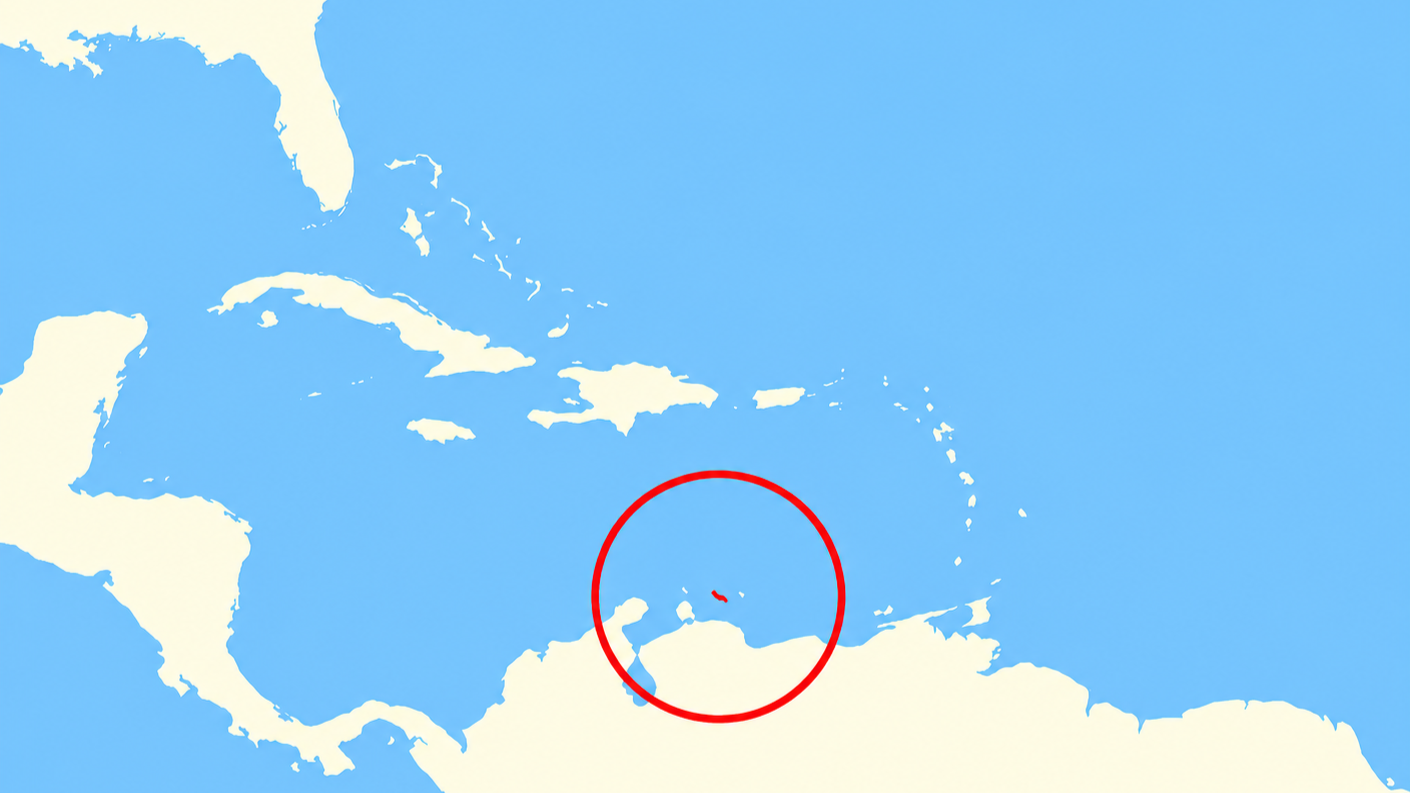
But a month later my parents tell me about a new family trip – away from cold, snowy mountains, to the hot, tropical beaches of Curaçao.
I’ve never heard of this place, and I’m cautiously optimistic…
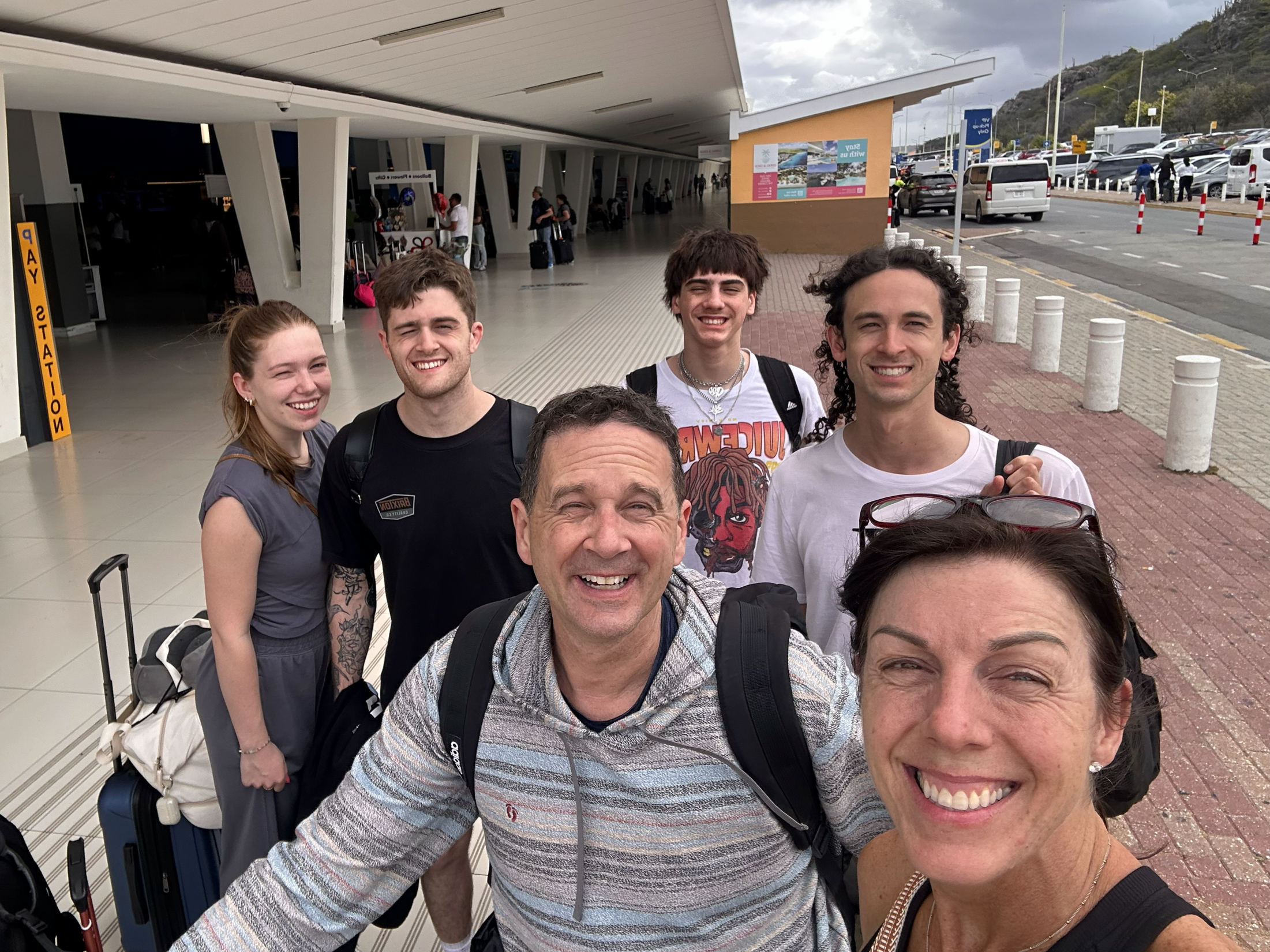
Four weeks later it’s 3am on a dark, warm April morning. Mom, Dad, Jacob, Bryce, and Maddie pull up outside my house.
I cram into the already-full truck and we’re on our way to the Pittsburgh airport.
Index
About Curaçao
Curaçao (kur·uh·sau) is a self-governing country with constitutional ties to the Kingdom of the Netherlands.
The local language is predominantly Papiamentu, a hodge-podge of Spanish, Portuguese, Dutch, and African languages, but most people also speak English, Spanish, & Dutch.
It’s not a big island – seven times smaller than Rhode Island – but I’m confident of hidden gems and secret outposts just waiting to be discovered.
Eight hours after leaving Pittsburgh we finally arrive – but before we make it out of the airport, we’re given free silver tote bags.
“I don’t need one” I say, so my dad grabs one on my behalf.
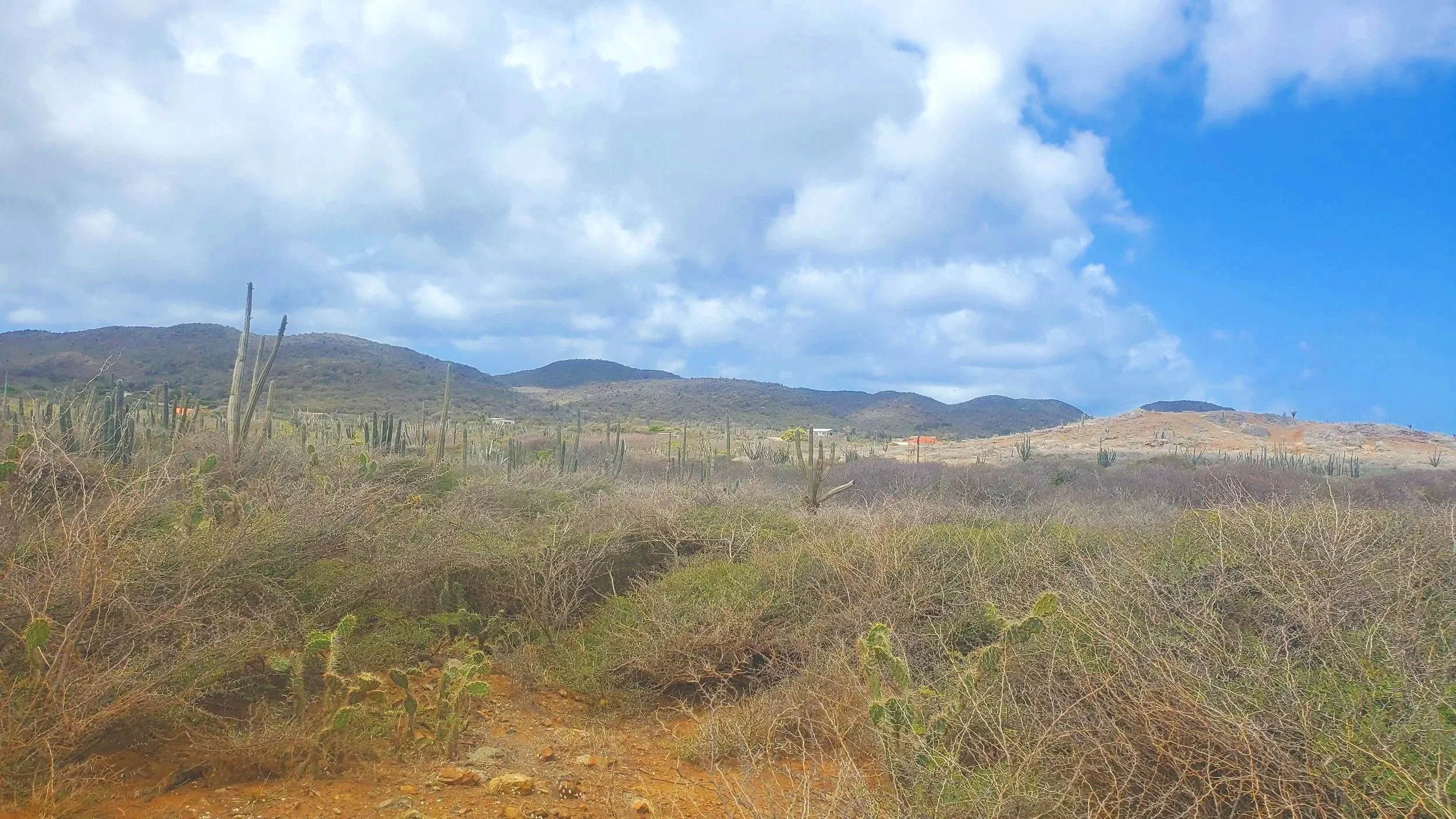
As we drive across the island in our black van rental, I notice it's very desert-y; some small trees line the roadway, but it’s mostly turquoise agave, spiky cacti, and limestone rocks.
Thirty minutes later, driving across the width of the island, we pull up to our condo; One Mambo, Mambo Beach.
Bon Bini!
It’s simple but airy with windows everywhere; the condo itself is shaped like a horseshoe, and you can even see through the other rooms across the terrace.
In the middle of the horseshoe, tall palm trees rise up from the parking garage, a level below ground floor, next to the private pool.
Of course the first thing we do is search for the beach – but what separates us is a strip of shops called Mambo Beach Boulevard.
Restaurants, souvenirs, gelato, even a build-your-own-cologne experience lie right outside our doors; plenty of ways to spend money before stepping on the beach.
Mambo Beach
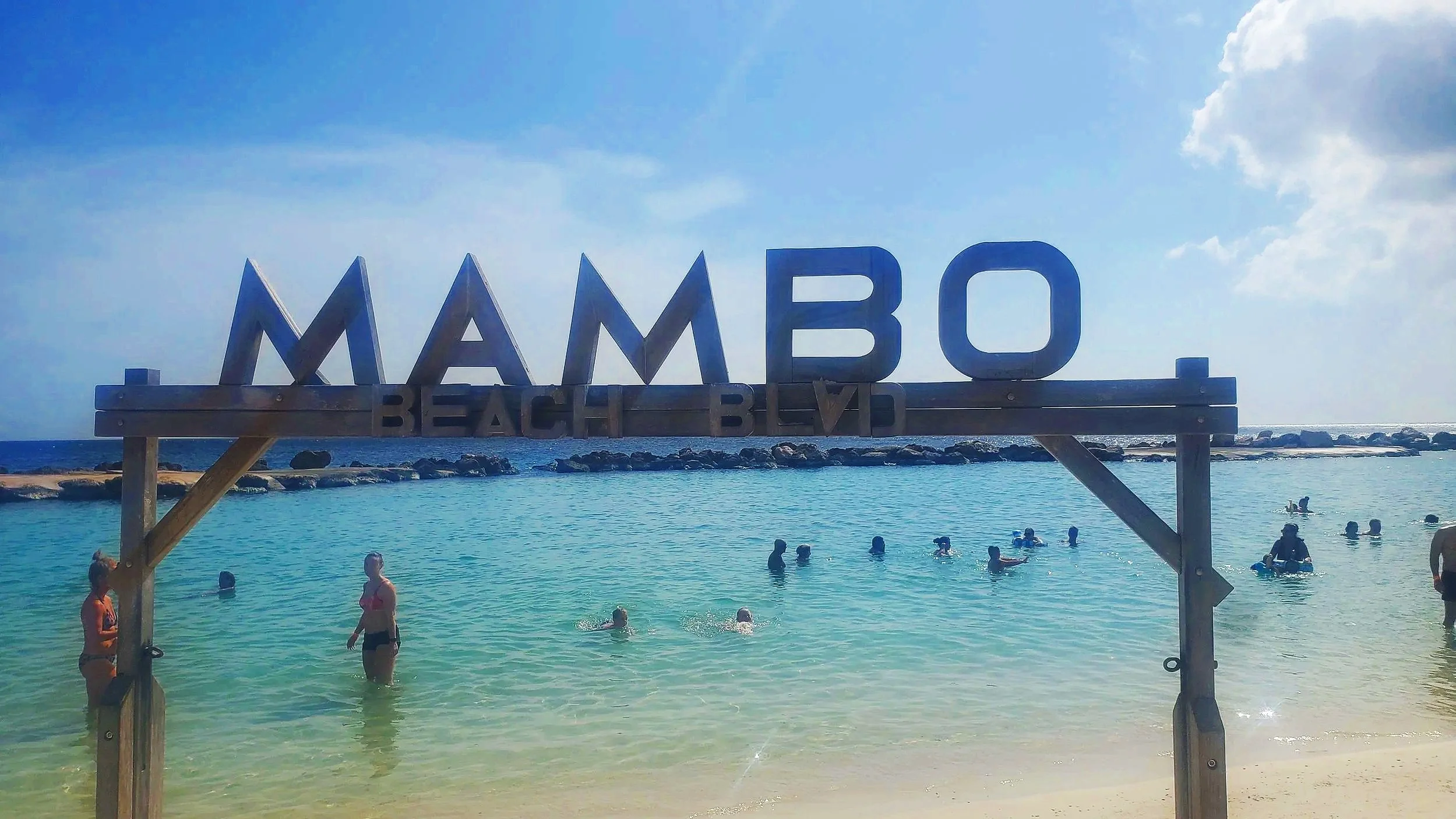
Palm trees, beach chairs, and bars press the waterfront; the calm lagoon of Mambo Beach is full of amateur snorkelers, kids playing in the water, and adults snoring in their sunny beach chairs.
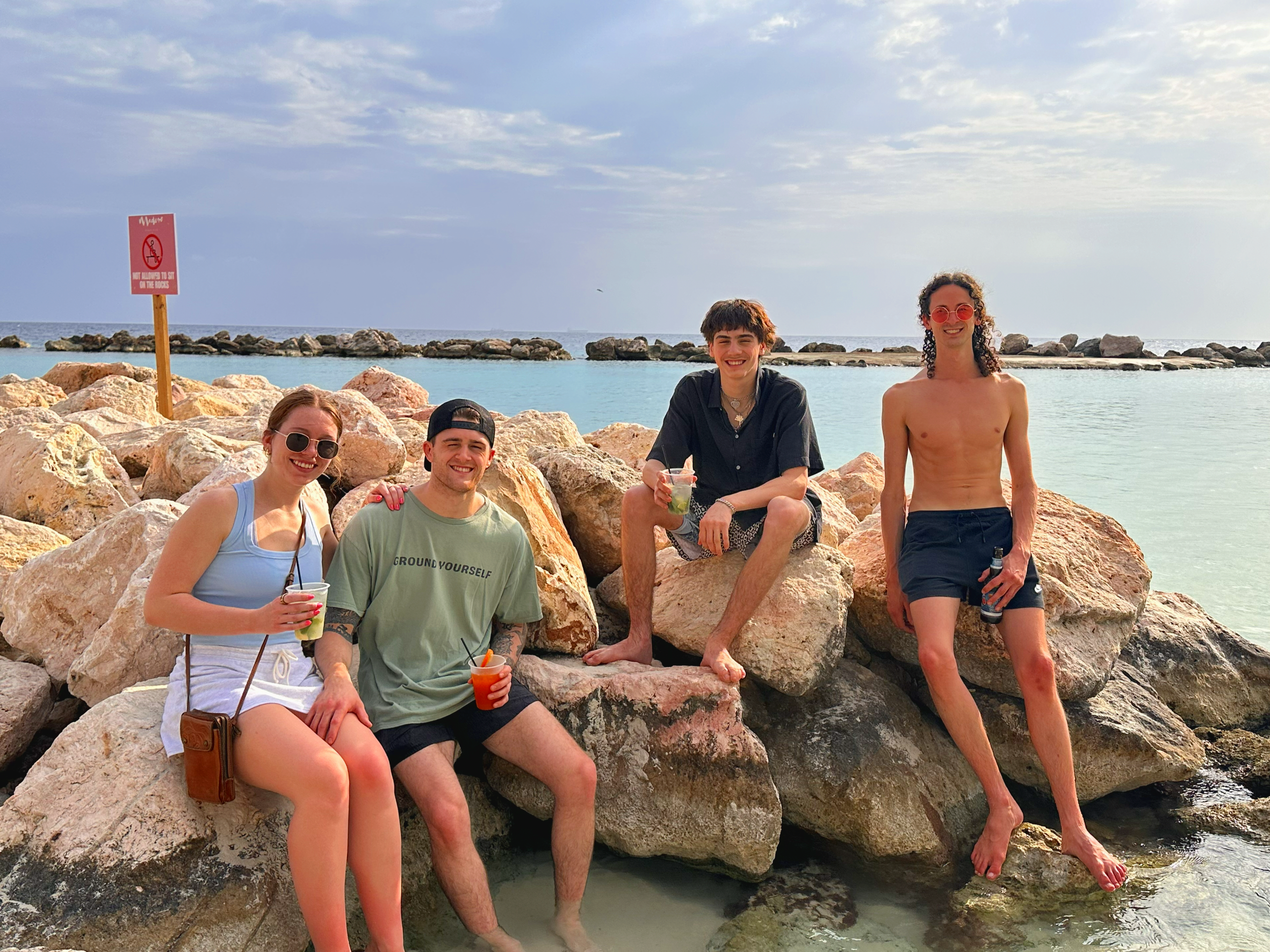
We plop ourselves down at a picnic table on the beach and truly relax.
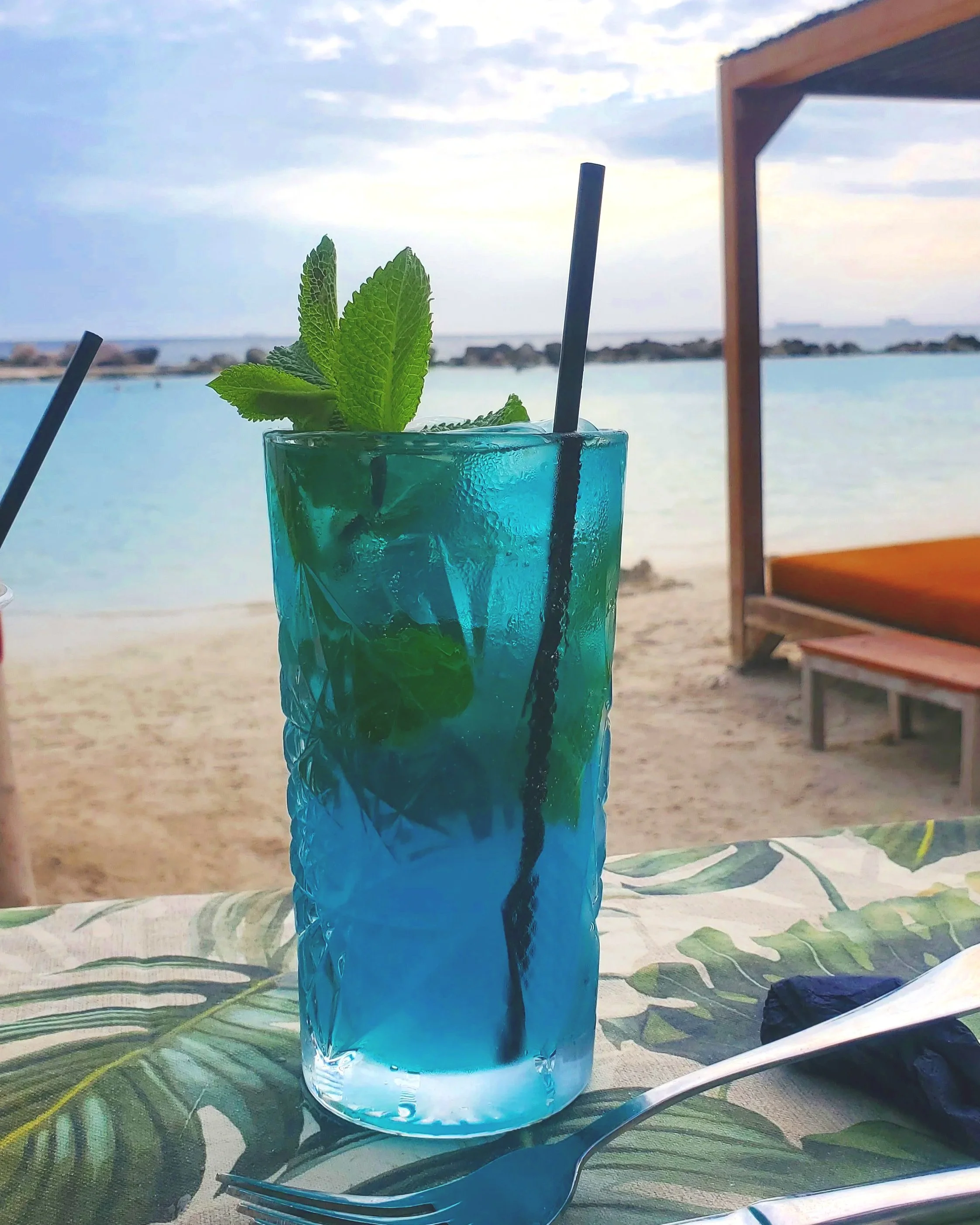
Blue tropical drinks hit the table, and an ongoing joke about the correct pronunciation of “Curaçao” ensues. We clink cold drinks together and cheers to an awesome family vacation.
After dinner we hear music on the beach; Lil Kleine, a famous artist from the Netherlands, performs tonight.
Madero Ocean Club
I’m reluctant to step inside Madero Ocean Club – the music is good, but no one's dancing. It doesn't seem very alive, and the day’s travel is wearing on me.
But Bryce wants to go in, and I’m no stranger to the scene – plus, we’re on vacation!
The beach club is packed; chain-smoking cigarettes, conversations in different languages, and foreign music – and everyone’s tall!
It’s around this time we figure out the majority of other tourists here are from the Netherlands, not America.
The music is clearly heard from our balcony after we walk up.
Suddenly, without notice, a steady stream of fireworks explode with color in the nighttime sky – we close out our first night in Curaçao with a bang!
My (Snorkeling) Struggles
Today is a planned slow day of the trip; I crawl out of bed only to lay back down on the outside couch on the balcony.
I’m easy-going this morning, letting the salty sea air set me right.
In the parking lot outside our condo, a gentleman from Diep Curaça fits us to snorkeling gear, answers some questions, and sends us on our way.
It’s a cloudy beach day, but we’re barefoot and shirtless – who's upset about that?
We strap on our silicone flippers, rubber masks, and plastic breathing tubes to swim across the lazy pool.
There’s mental preparation in mouth-breathing through a tube, and between the mask fitting, hair getting snagged by silicone straps, and goggles fogging up, it can be frustrating.
I remind myself there’s nothing to rush for — I’m at the beach with my family, the water is warm, the fish aren’t going anywhere, and I’m here to relaaaaxxxx…
My face finally underwater, I see fish of all shapes, sizes, and colors peacefully floating around, some in schools, others dart around solo.
Jacob chases after a few, but they’re otherwise unbothered at arm’s length away.
After an hour or two at the beach, it starts raining.
My first snorkeling session in Curaçao is fine, but there’s room for improvement — I need to be ready for the sea turtles tomorrow morning.
Since we can’t bake in the sun this evening, we visit the main city on the island (and also a UNESCO World Heritage site), Willemstad.
Punda
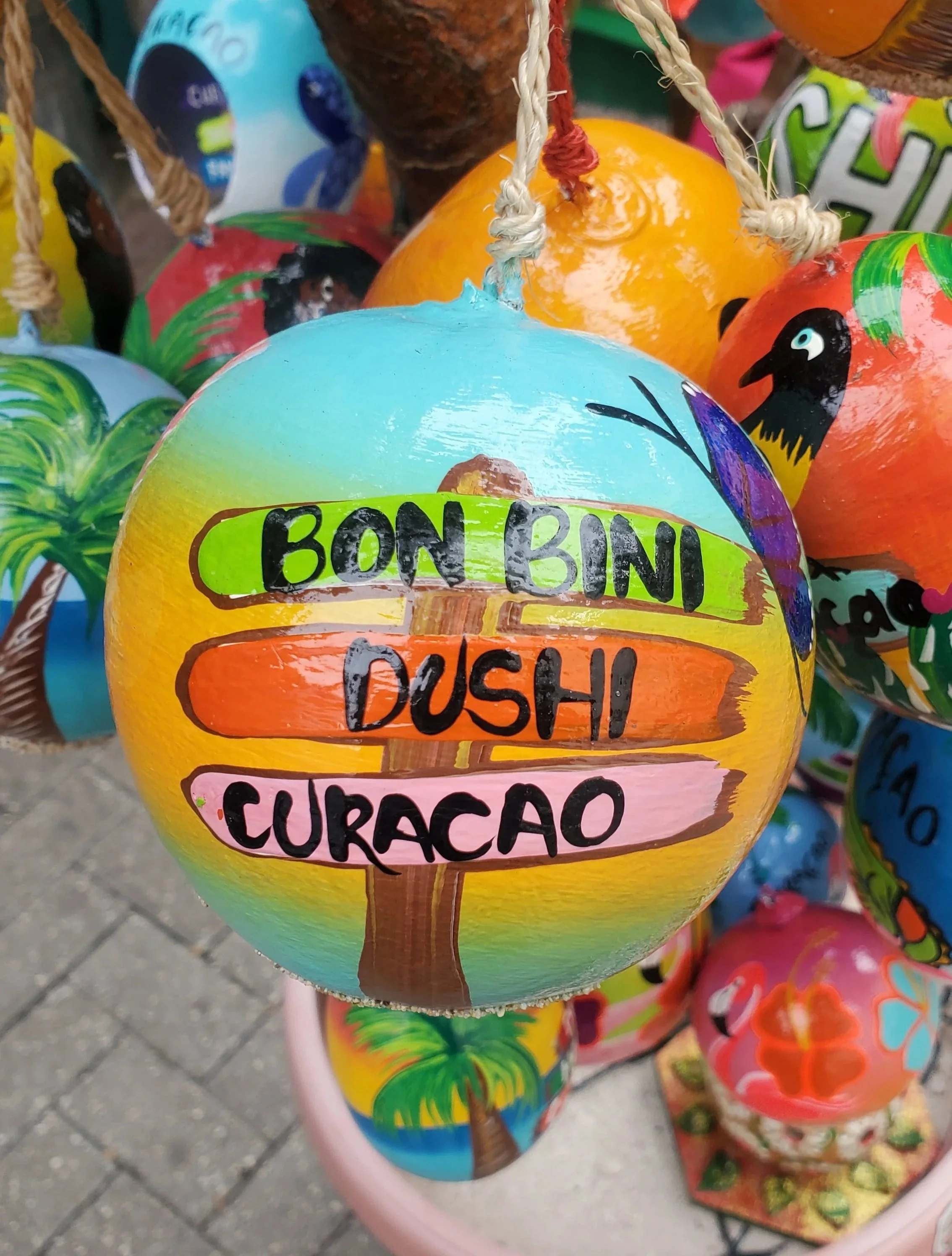
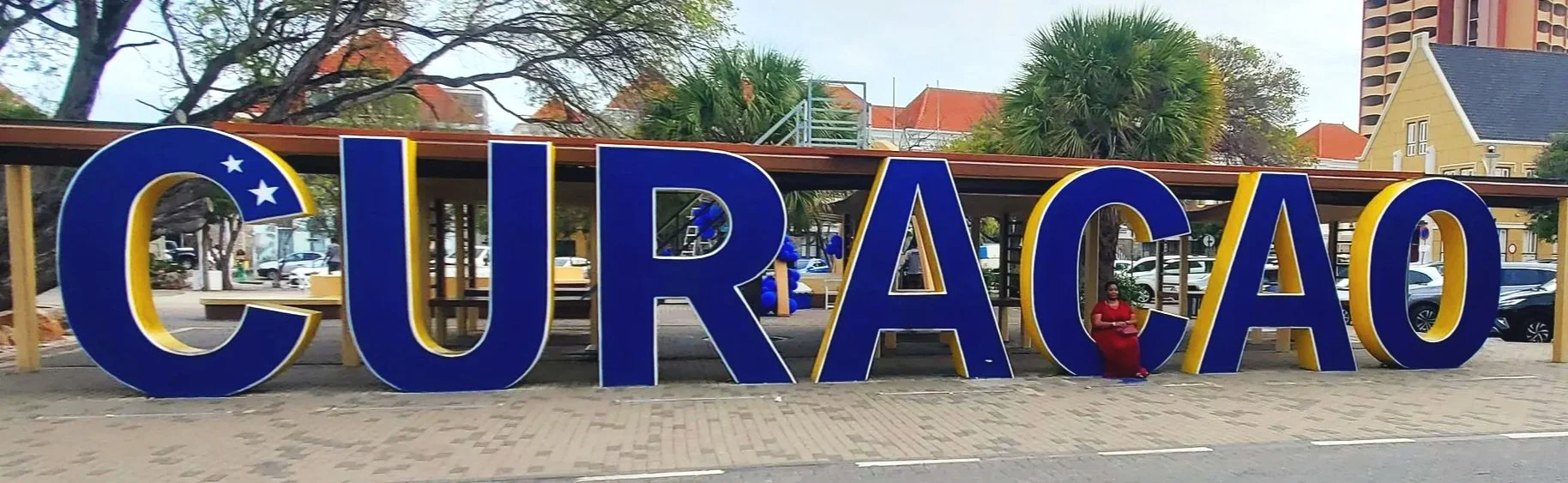
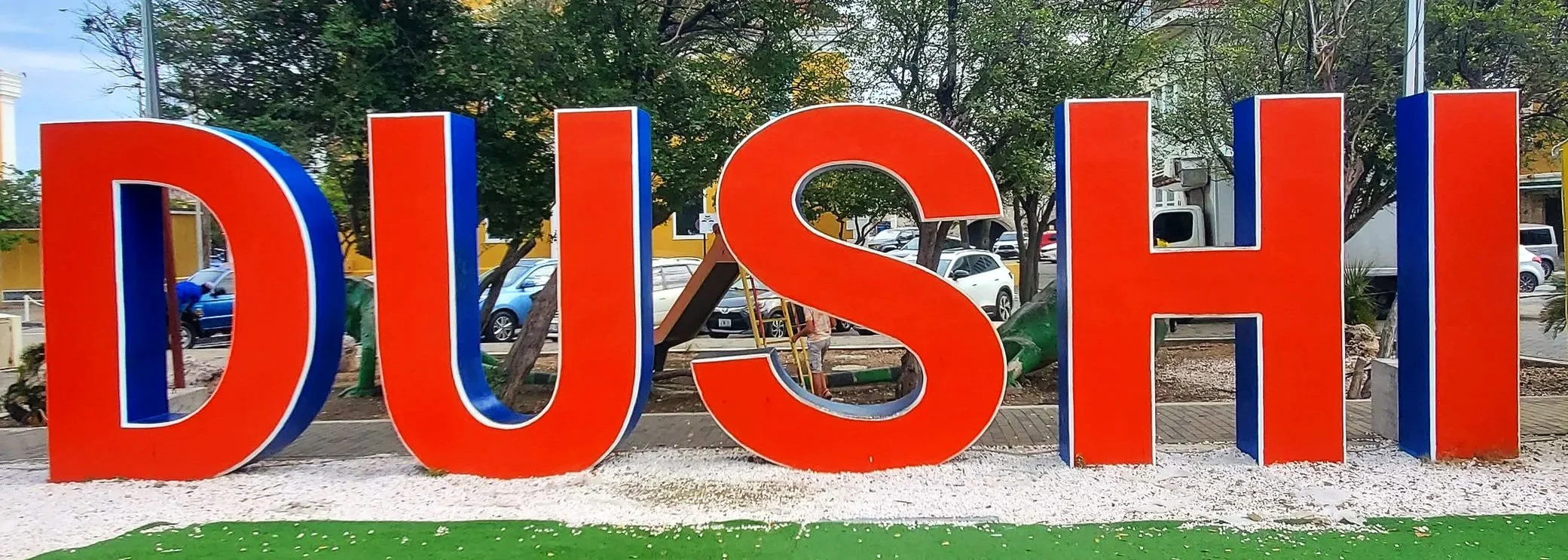
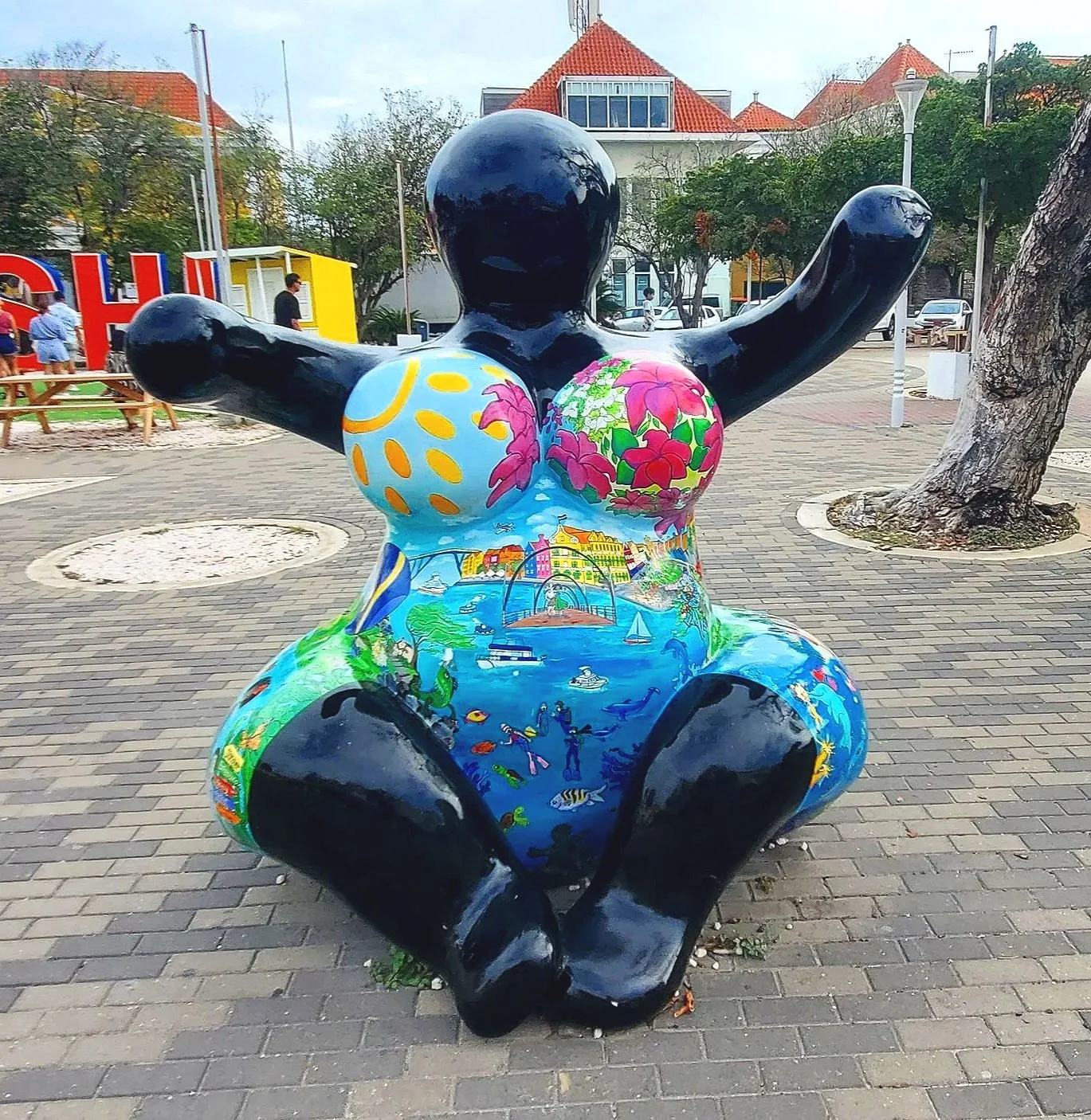
The brick streets are filled with friendly patrons and locally-crafted souvenirs; everywhere people enjoy themselves. The sun peeks out from layers of clouds overhead, and it turns into a nice evening on the town.
Eventually we stumble upon the UNESCO World Heritage Site and iconic symbol of Curaçao: Handelskade.
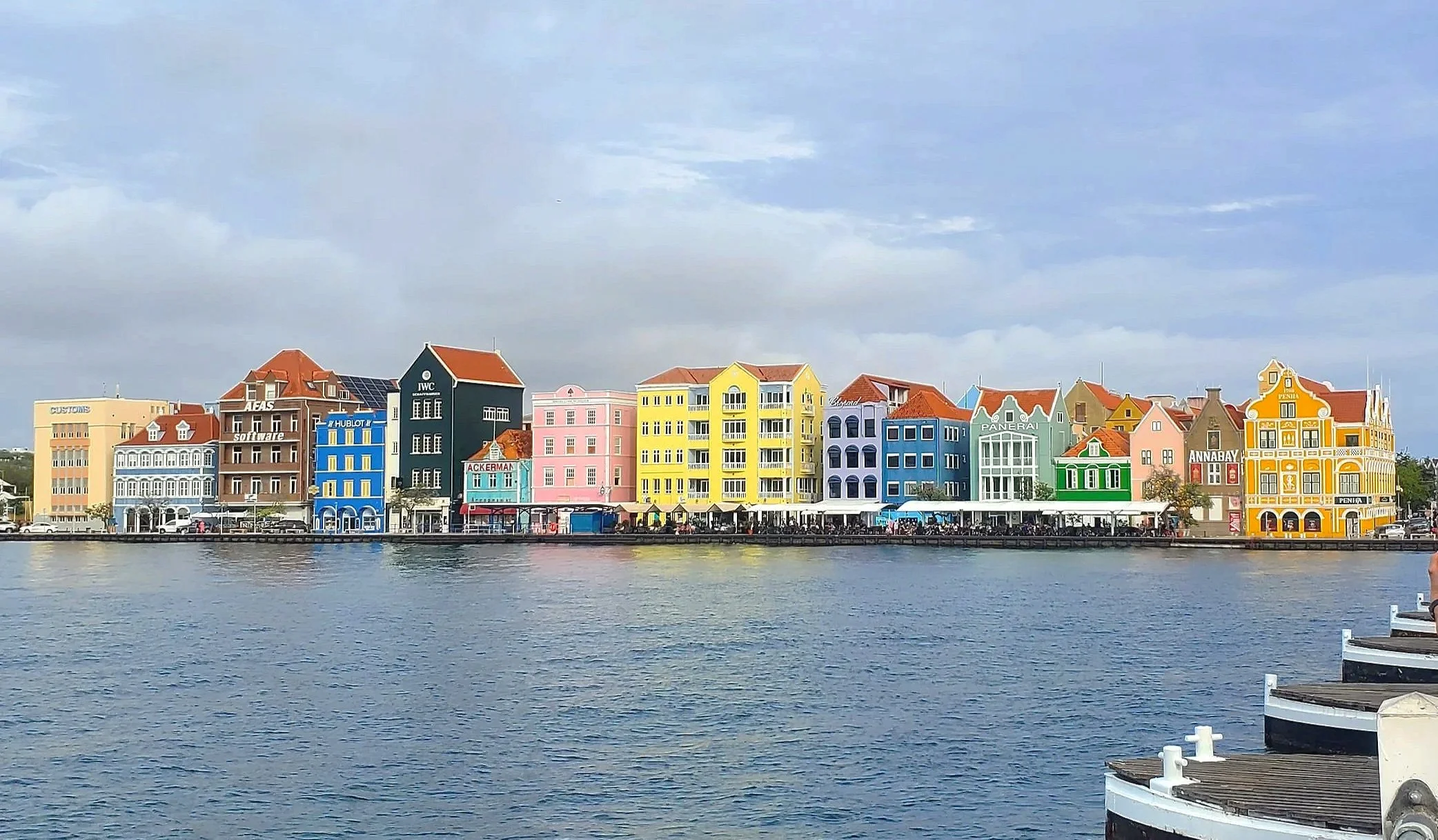
The historic street is lined with colorful, Dutch-inspired buildings along St. Anna Bay; the key to the island’s economic growth since Dutch settlement in 1634.
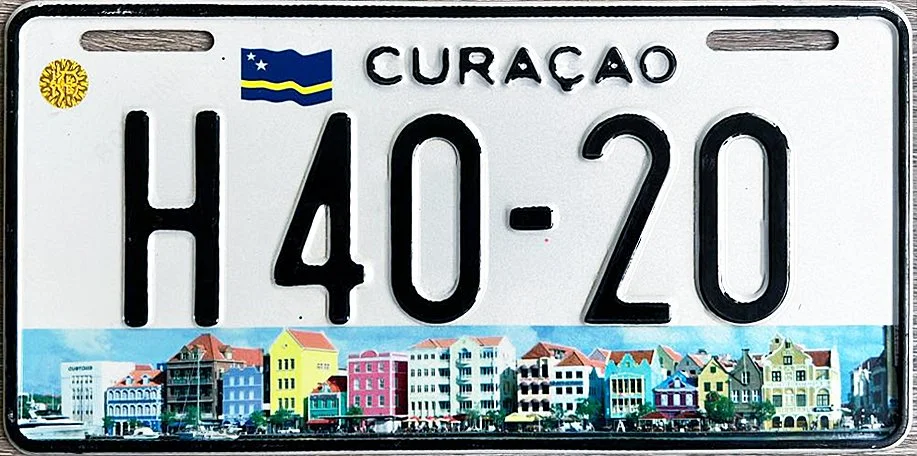
Across the Koningin Emmabrug (Queen Emma Bridge) we find the classic view of the town found on most Curaçao license plates.
We browse over centuries-old bricks streets lining the bay, then a provocative sign draws our attention: Swinging Old Lady Brewery, a reference to the Queen Emma Bridge that swings open for passing ships.
Soon we’re drinking Waka Waka beer and watching the old lady swing open the sparkling bay waters. The architecture is just as graceful, its aged exterior reflecting the full spectrum of the setting sun.

We came to Punda at the perfect time; it’s fireworks night! The balls of fire light up the night, then we head back to the condo – tomorrow morning, we have to beat the crowd to the sea turtles.
Playa Grandi
At 8:30am we pack up for the day to go beach-hopping.
It’s a smooth drive up, only a single two-lane road outlines the top of the island. An hour later, turning down a small drive, we only see a few people at Playa Grandi.
A small pier extends 60ft over the water, some fishermen already posted up.
A pungent stench saturates the air from freshly butchered tuna footsteps away.
Menacing-looking pelicans loiter on nearby boats, but all they want is fish scraps.
I throw up my drone to get some aerial footage, but the footage is shaky. Besides, my dad is calling me into the water – millions of tiny fish populate the water, and everyone's in their scuba gear eager to swim with sea turtles.
Snorkeling with Sea Turtles
I wade into the shallow clear water to join the rest of the family.
This snorkeling session is much better — I learned to spit on the inside lens of my goggles to prevent fog build-up, and to relax — before I go under.
A man stashes some chum from the butchering station into a small fabric bag and jostles it in the waveless water.
Another bangs a big butchering knife off the wooden pier, yelling the English equivalent of “Here fishy, fishy, fishy!”
Minutes later the first sea turtle appears! He swims to the man with the meat sachet, eagerly snapping at the bag.
In a flash the man snatches up the first female he can find – my mother! – and holds her horizontal in the water. He exclaims “no touch!” then lures the huge sea turtle right onto her lap.
More sea turtles arrive, some big and some small. Their soft, bony underbelly momentarily beaches on her lap. After a few moments the turtle swims away, marking a one-of-a-kind unique experience.
But soon, with a dozen people surrounding the pier, the water gets cloudy; we swim down the shoreline, still finding plenty of fish, even a sea snake in just a foot of water.
After an hour and a half of swimming with sea turtles, we check it off the “Curaçao bucket-list.”
We had no idea what to expect, but trying new things in different cultures never fails to broaden awareness.
It’s a good thing we came early – parking is a nightmare now. Time for the next beach!
Beach Hopping
Grote Knip
A friendly green iguana welcomes us as we park in the expansive parking lot; walking along cliff faces we find crystalline water and a big sandy beach.
But not just any beach: the most photographed beach on the island, Grote Knip.
Carrying six people’s snorkeling gear in one hand, I’m eating my words to my dad – the silver tote bag works.
From the surface we see vast communities of coral, crabs, and fish.
Snorkeling in fifteen feet of water, fish dodge and laugh at us in our goofy-looking gear.
All this swimming is making us hungry, so we go to the next stop to find a beachside restaurant.
Playa Lagun
We have lunch at Discover Lagun, an open-air restaurant with a view of the mountains.
A friendly waitress seats us and serves us a bucket of local Klein beers.
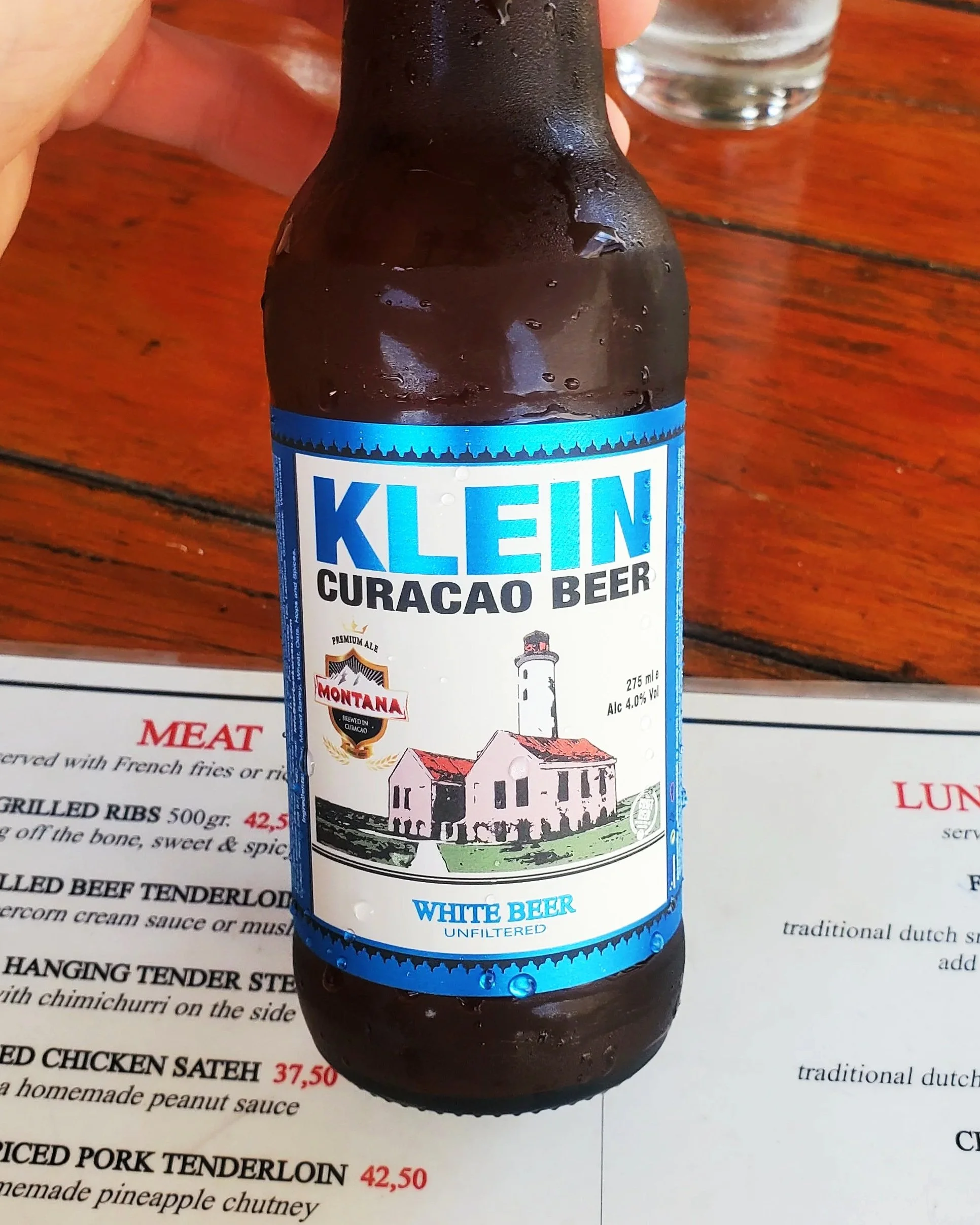
There’s a frenzy at the bird feeder beside us; Bananaquits and Venezuelan Troupials clamor for salt in the bird feeder – it helps them stay hydrated and maintain their mineral balance in the hot, arid climate.
Here we learn about one of the island’s famous dishes, keshi yena: a baked cheese dish stuffed with spiced meat, representing the fusion of cultures that call this island home.
The chef sings and dances to 2010’s American music, everyone’s favorite.
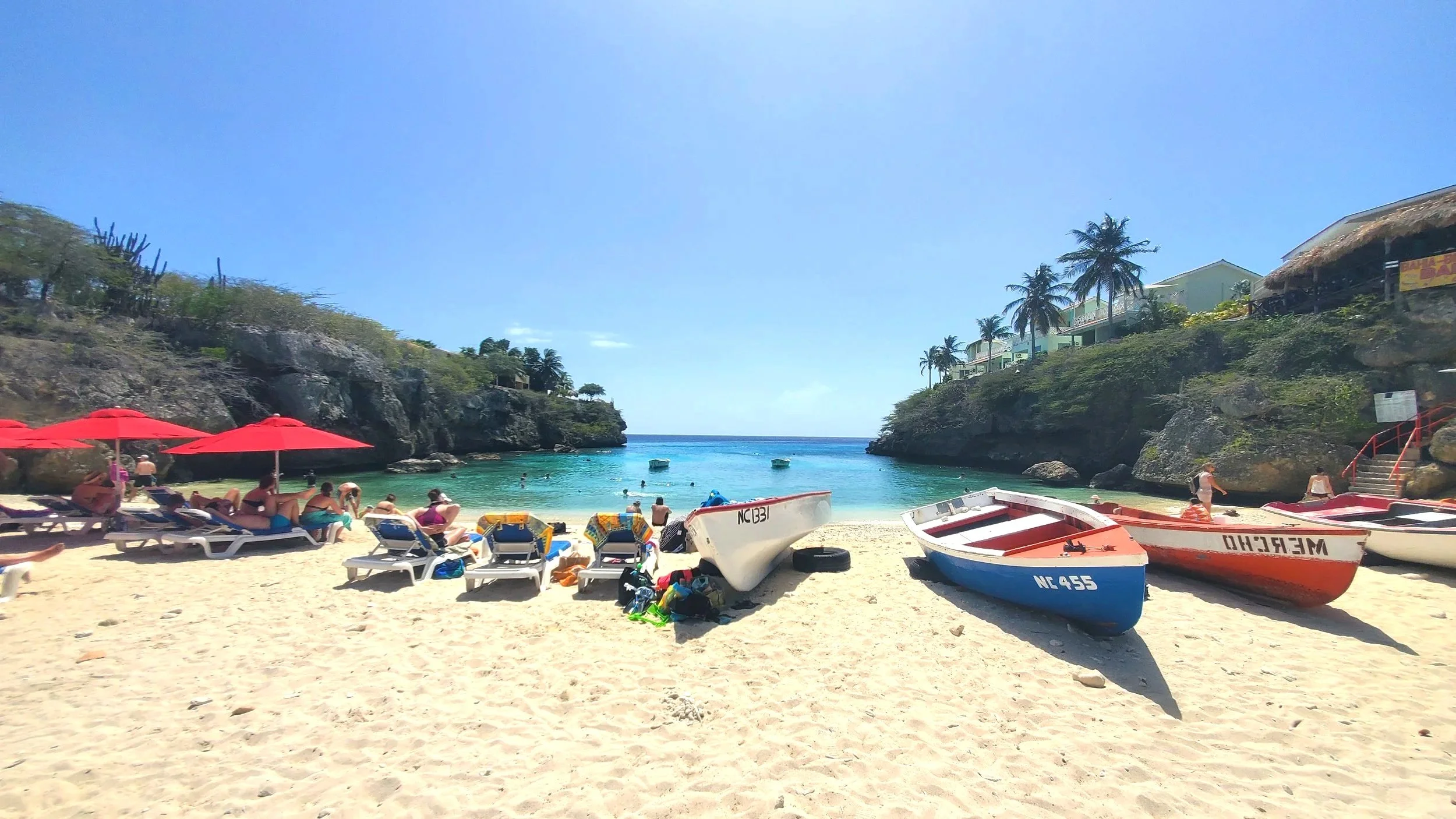
We cross the parking lot to Playa Lagun. This beach has a tidier, calm, more private feel – a mood set by enclosing rock walls and the “no speaker music” policy.
Pelicans dive bomb for fish, and our flippers are especially useful as Bryce and I dive in 25 feet of water.
Every beach we visit has glassy water and an abundance of marine life.
Flamingos, Fighters & Dutch Dance Music
By now, our beach-time tanks are exhausted – we’re ready for the condo. But first, a small detour to Seru Largu National Park.
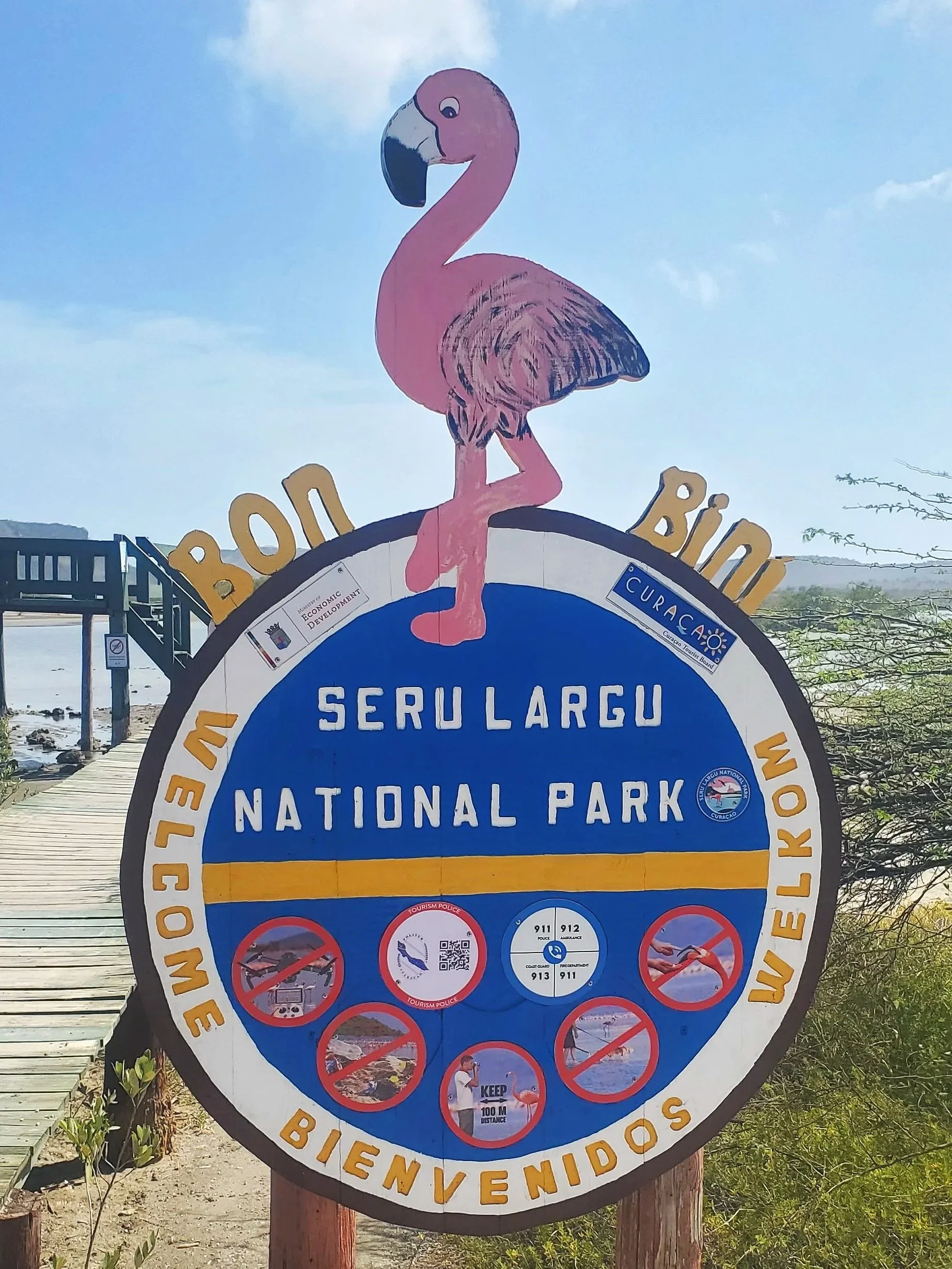
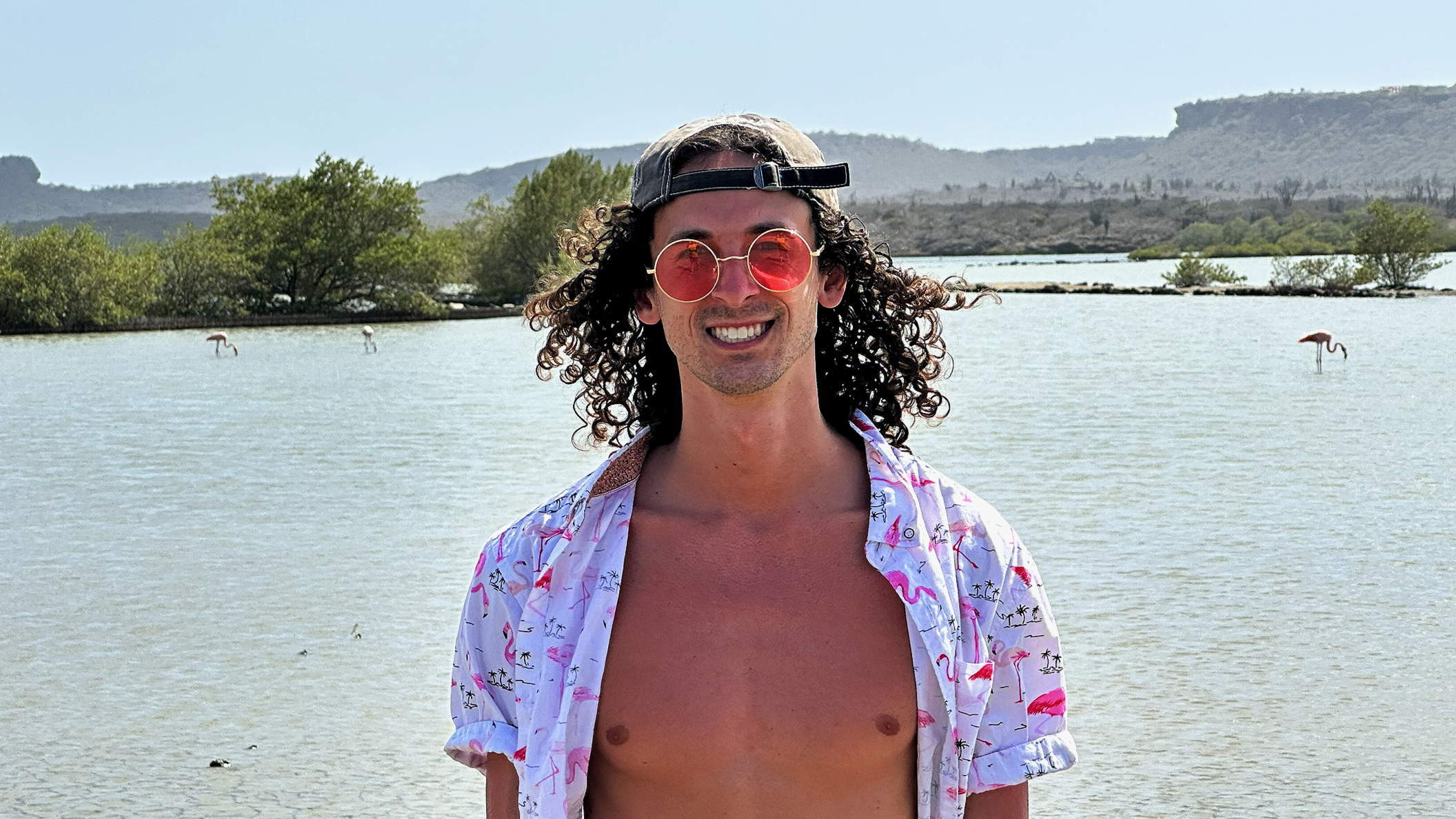
The stretches of salty lagoons found here are perfect for shrimp and algae – the main food source for flamingos.
On caked, wet-baked earth we spy a few in the water; with special adaptations like long legs and salt-adapted eye glands, the famous pink birds thrive in this unique, often harsh environment.
When the scorching sun, low annual rainfall, strong winds, and shallow seawater lagoons all combine, you get salt beds.
Salt was considered “white gold” in the 1600s to preserve fish and meat – one of the main reasons the Dutch seized this island from the Spanish in 1634.
We’re not at the condo for long – Dad, Bryce and I make our way back to Mambo Beach for the last few hours of sunlight. There we find a stage with a camera crew and announcers; weigh-ins for Honor Fight League.
As they announce the matchups, the fighters hop on stage, step on the scale, then stand locked eye-to-eye in a showdown with their contender.
Bryce points out a guy from the crowd he thinks is a fighter – then they call up the main event, and the guy, Brian Hooi, walks on stage!
He faces Jhon Grueso for their third fight tomorrow night, each with one win.
It gets heated on stage when Jhon attempts a leg kick on Brian! Bryce sneaks in a picture with Brian after things settle down.

After sunset, on the way back to the room, we trail a boisterous crowd to Wet & Wild Beach Club.
It’s free admission, and inside are dudes with Greek-letter scarves dancing on tables and cheering along to Dutch music.
We don’t know the songs, but it’s easy to yell out “hey!”,“oh!” to the beat until tired eyes and ears drag us to bed.
Aloe Vera Farm
The next day starts at The Aloe Vera Farm; turning down a dirt road, rows of pale-green aloe plants run up, down, and across the dusty dry ground.
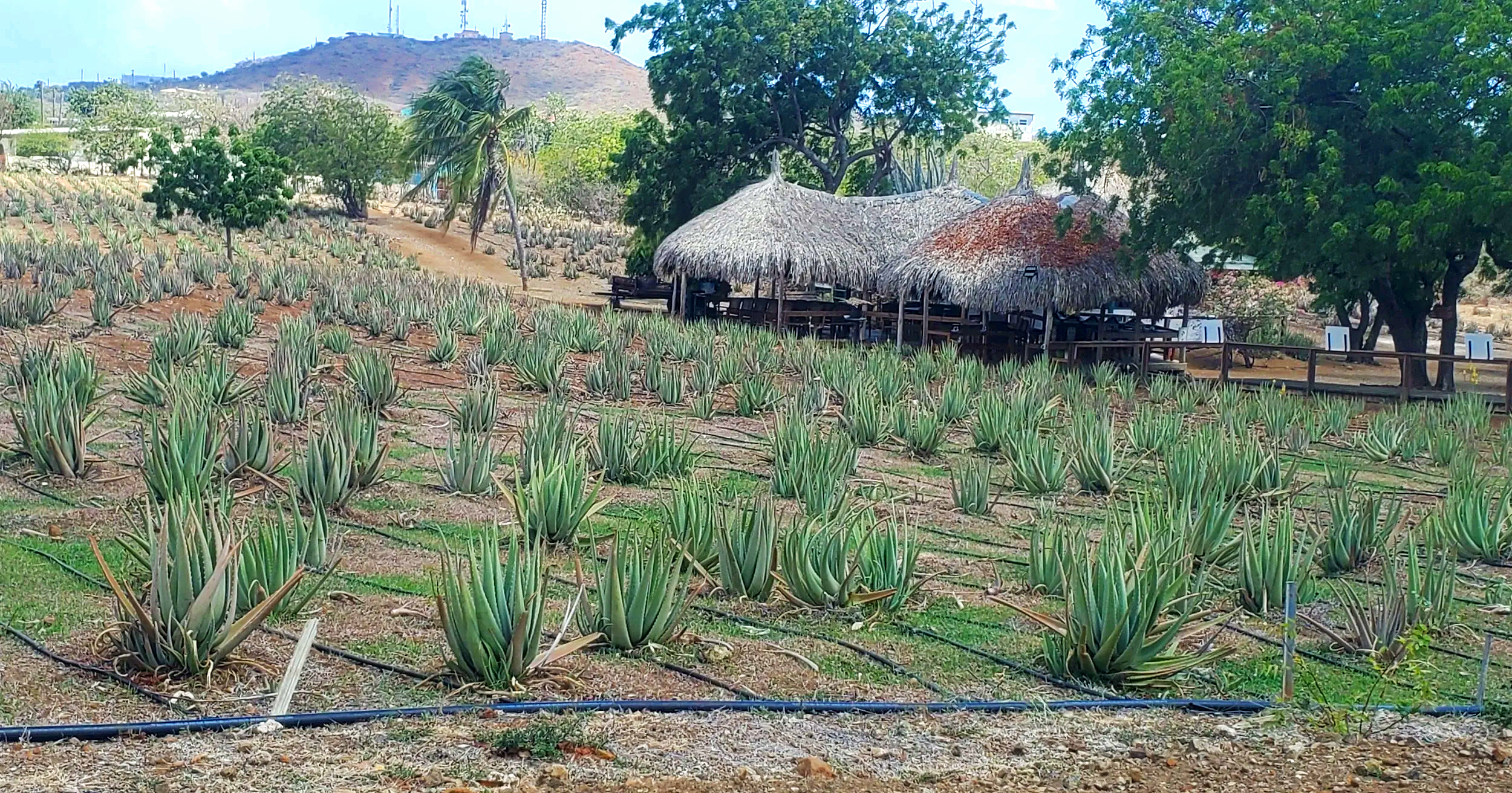
The farm tour only happens on the weekdays – but on the weekends they have a DIY Aloe Vera Body Spray Workshop. It’s a good workshop for Bryce – yesterday, he gave a valiant effort avoiding sunscreen the best he could.
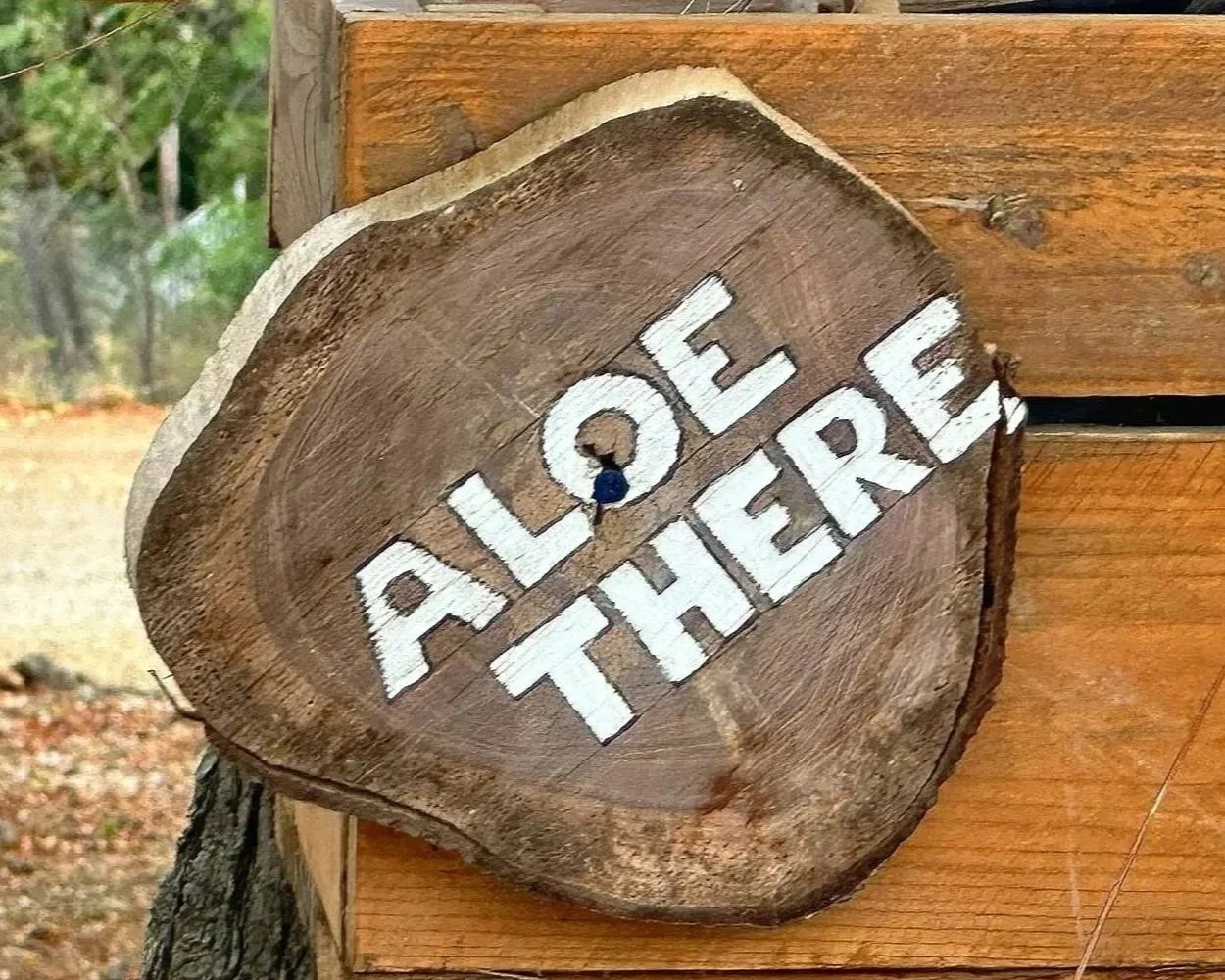
A fun, charming woman named Day leads our workshop; first, she describes aloe’s history, treasured uses, and overall benefits.
She tells us “vera” means “true” in Latin, which means aloe vera is the true aloe plant– packed full of vitamins and nutrients, it’s an underrated, overlooked superfood.
Day demonstrates how to filet and harvest the leaf, but soon we have a visitor – a pet chicken. She struts over knowing full well what comes next as Day cuts up small slimy squares of the aloe gel. We sample the gooey meat without weird faces while the chicken looks for its own piece to hit the floor.
Armed with new knowledge, a buddy, and a knife, we head to the fields to harvest our own aloe vera leaf.
DIY Aloe Vera Body Spray Workshop
Stepping into the field, “it’s just like Christmas tree shopping.” I pick out a big juicy leaf, then Bryce slices it at the base and pulls from one side for a clean removal.
With prized possession in hand, we march back to make our homemade body spray.
It’s harder than you think – Bryce and I take turns filleting the slippery aloe leaf – a few times it almost slides right off the table!\
We gather as much meat as we can, blend it, push it through a strainer, then add lavender and tea tree essential oils.
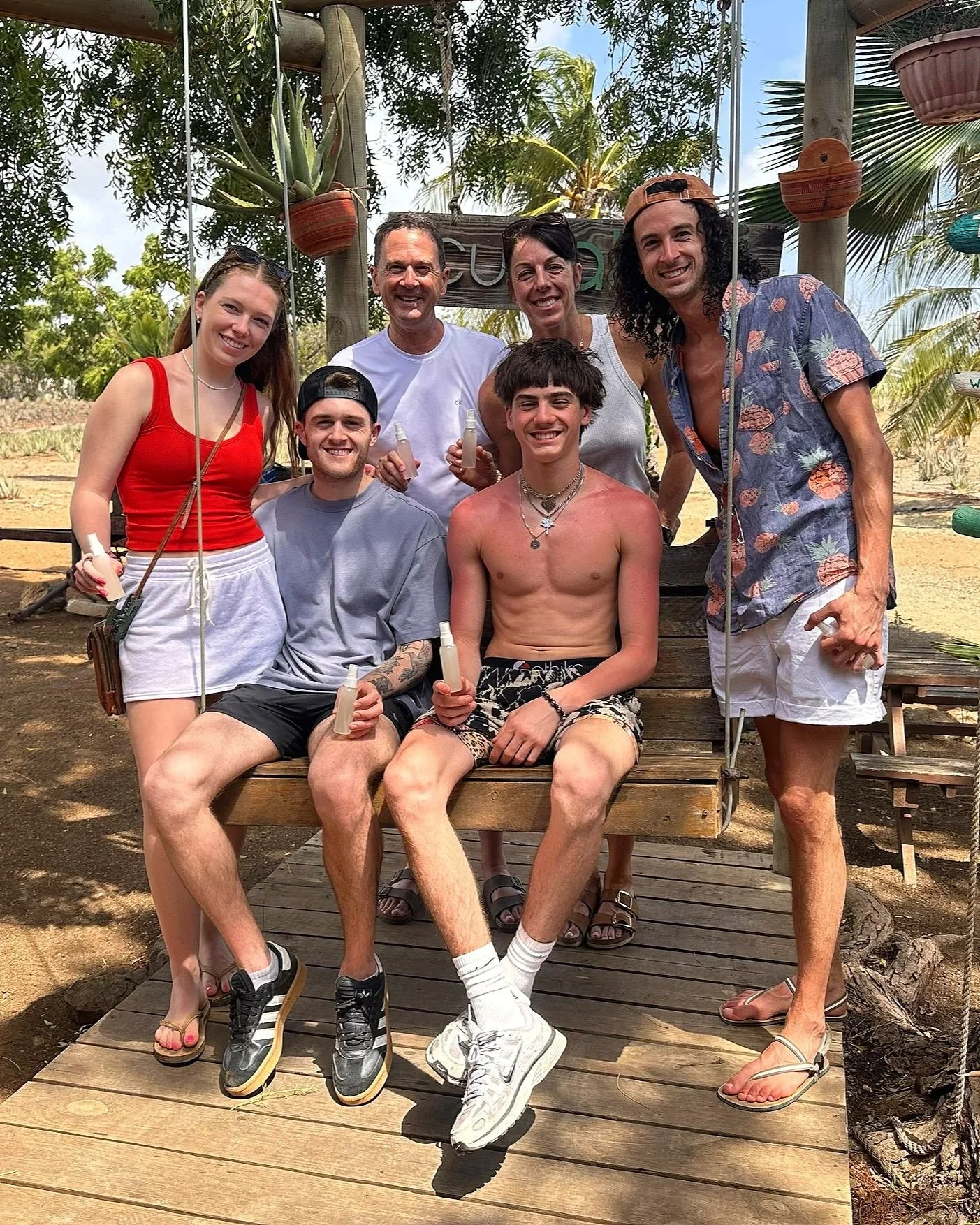
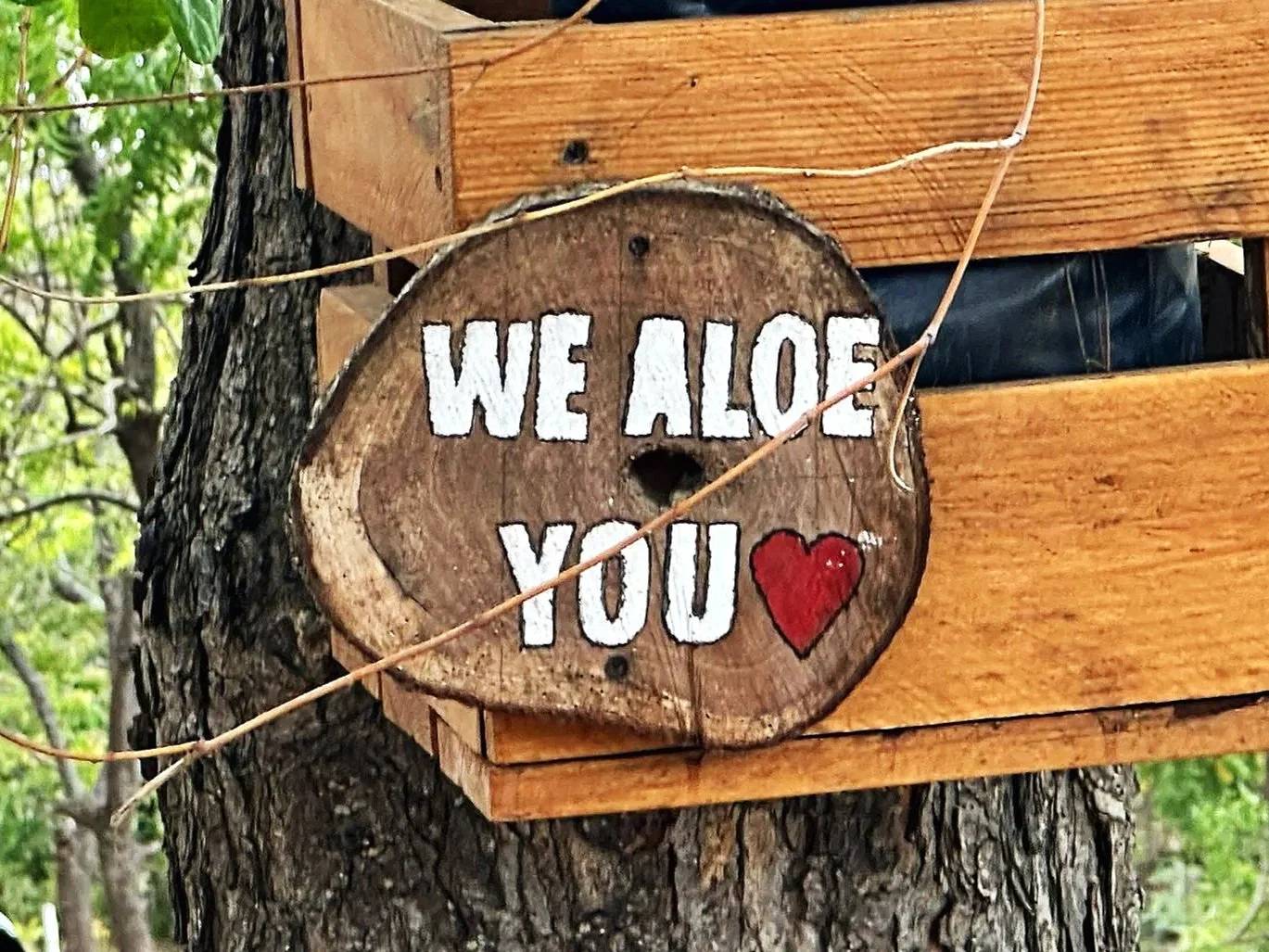
Any remaining aloe gets rubbed on our bodies — mostly Bryce’s. Now my family understands why, after a long day in the sun, I walk around with aloe leaves stuck to me!
Ostrich Farm
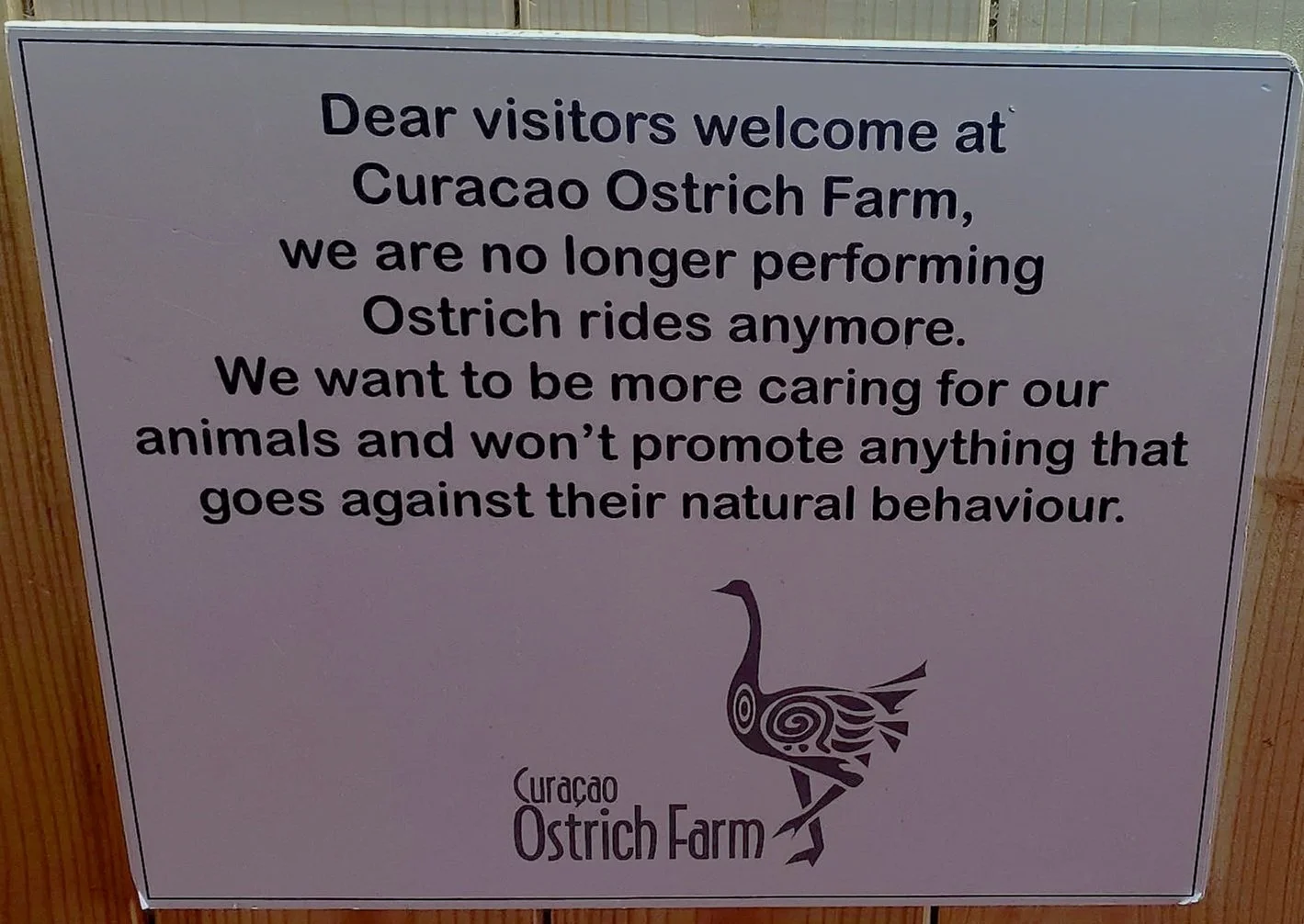
We head right around the corner – literally – to our next stop: the Curaçao Ostrich Farm. On the way my dad asks “Can I ride an ostrich?”, but Jacob says “There’s no way a person can ride an ostrich.”
In the parking lot, we’re greeted with glossy, colorful tail feathers spread wide in a showy manner — a peacock! It’s a pleasant surprise, but Jacob’s more surprised when he sees a sign posted at the front desk:
Battling the Caribbean heat, we order drinks at the small adjoining restaurant. Inspired by the last tour, I order a cooling aloe vera drink.
Soon we realize there’s more than just ostriches and peacocks – parrots, pigs, chickens, turtles, rabbits, a crocodile, and emus all live here.
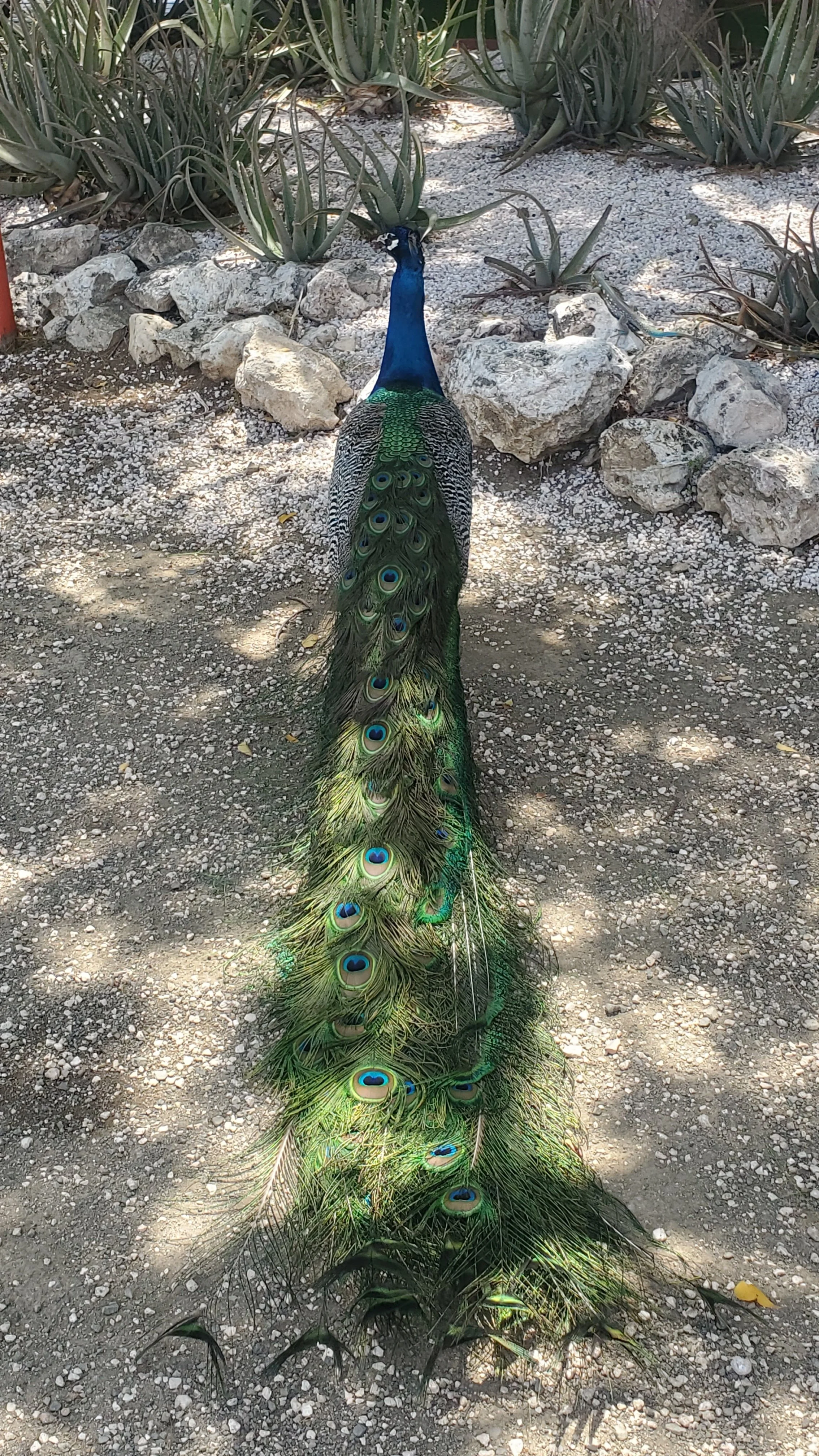
Click image to hear peacock sound
Peacocks call to each other, and instantly I recognize the sound — it’s Kevin from the movie Up.
My dad tries to record the calls on his Bird ID app, but their calls were too short and sporadic to get a reading.
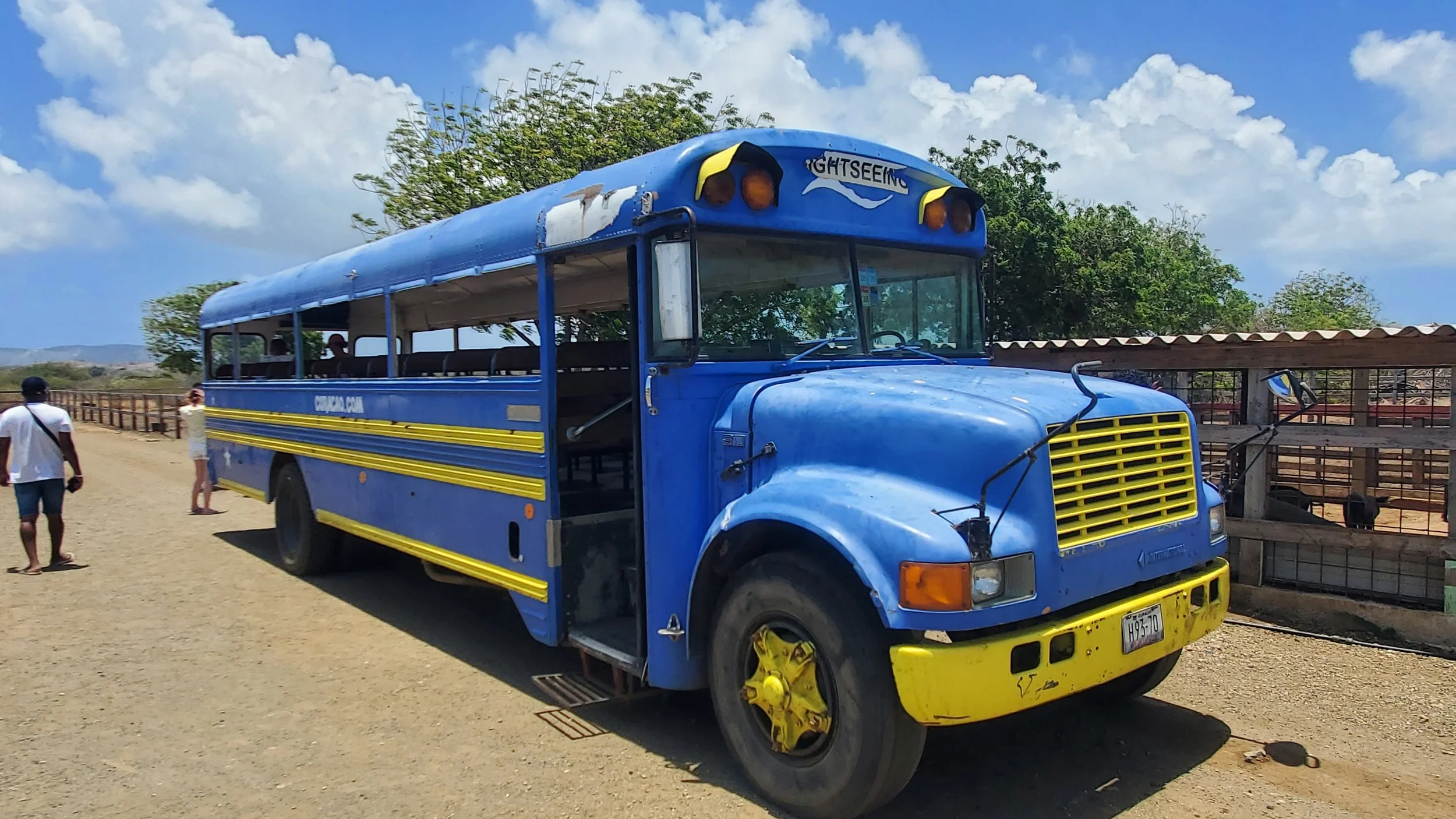
They call us for the start of the tour outside a light blue school bus.
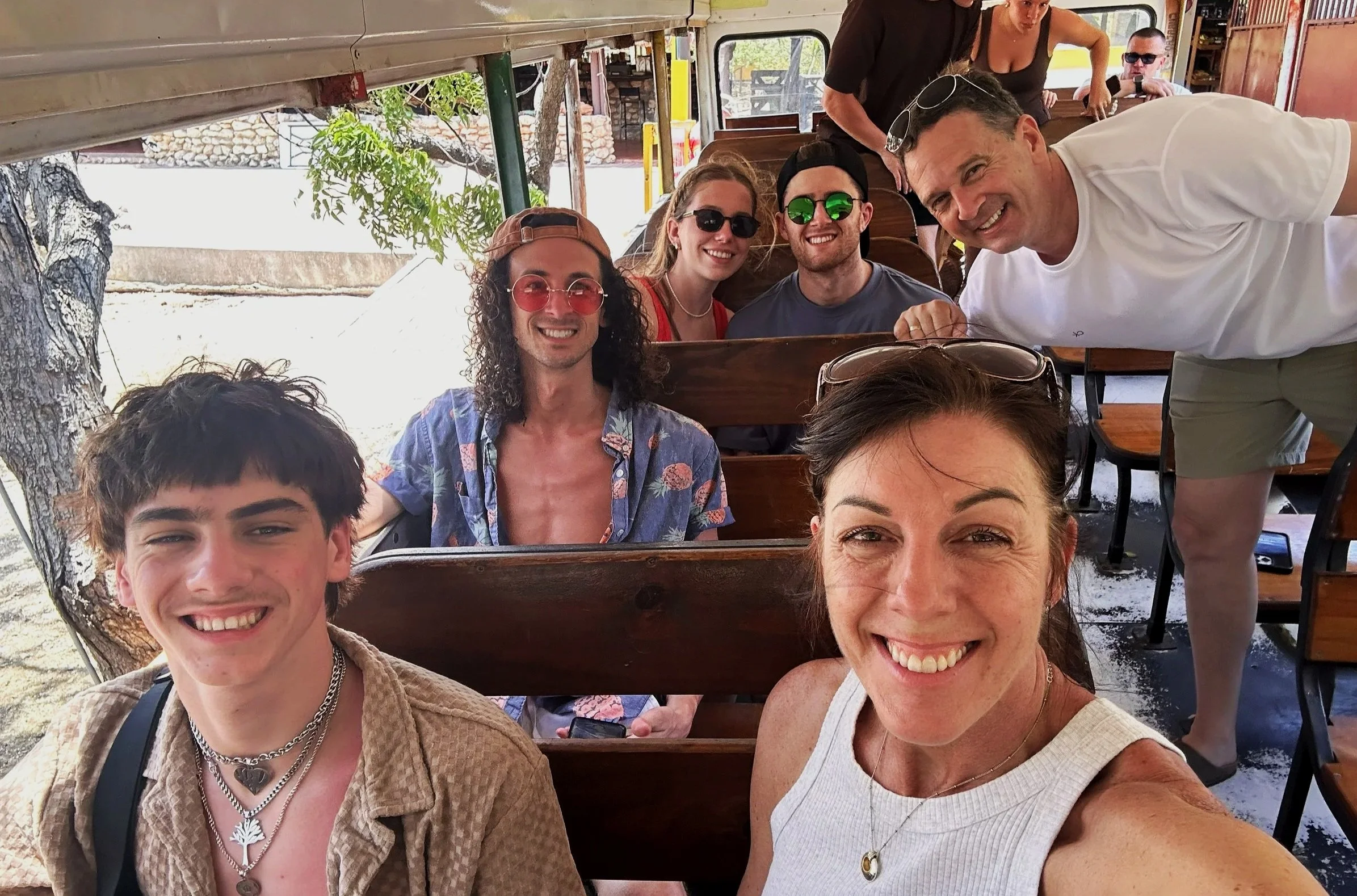
Our tour guide, Alexander, gives us the rundown; as we drives around to look at the animals, he’ll speak first in Dutch, then in English.
The old machine sputters alive, and we rumble down the dulled dirt road to see some big birds.
Emus & Ostriches
Native to Australia, the emu is the second-largest bird on Earth – and our first stop. Alexander says they can't fly, but they grow up to six feet tall and run 30 mph!
Never mind their beaks – to defend themselves, they deliver bone-breaking kicks with their tall, slender legs.
Native to Africa, weighing in at 300 lbs and standing up to nine feet tall, the ostrich is the largest bird on Earth. More dangerous than emus, ostriches run up to 50 mph have kicks that can kill; Alexander tells us a kick put one worker in an arm cast for four months.
Even though we’re standing on a bus, four adolescent ostriches stare at us at eye level with huge, black-hole eyes – some of the biggest of any land animal. Their movements remind me of prehistoric times where everything was big and dangerous.
But just watching them makes me laugh! They prance around the dirt pen, fluttering their whispy wings. They bite at the air to swallow food that doesn’t exist (they do this to cool off from the sun.)
At the next pen we take turns holding a bowl of feed – steadiness is key as three eager heads pound the bottom of the bowl, the feed bouncing up, down, and spilling all around – a hilarious sight to see.
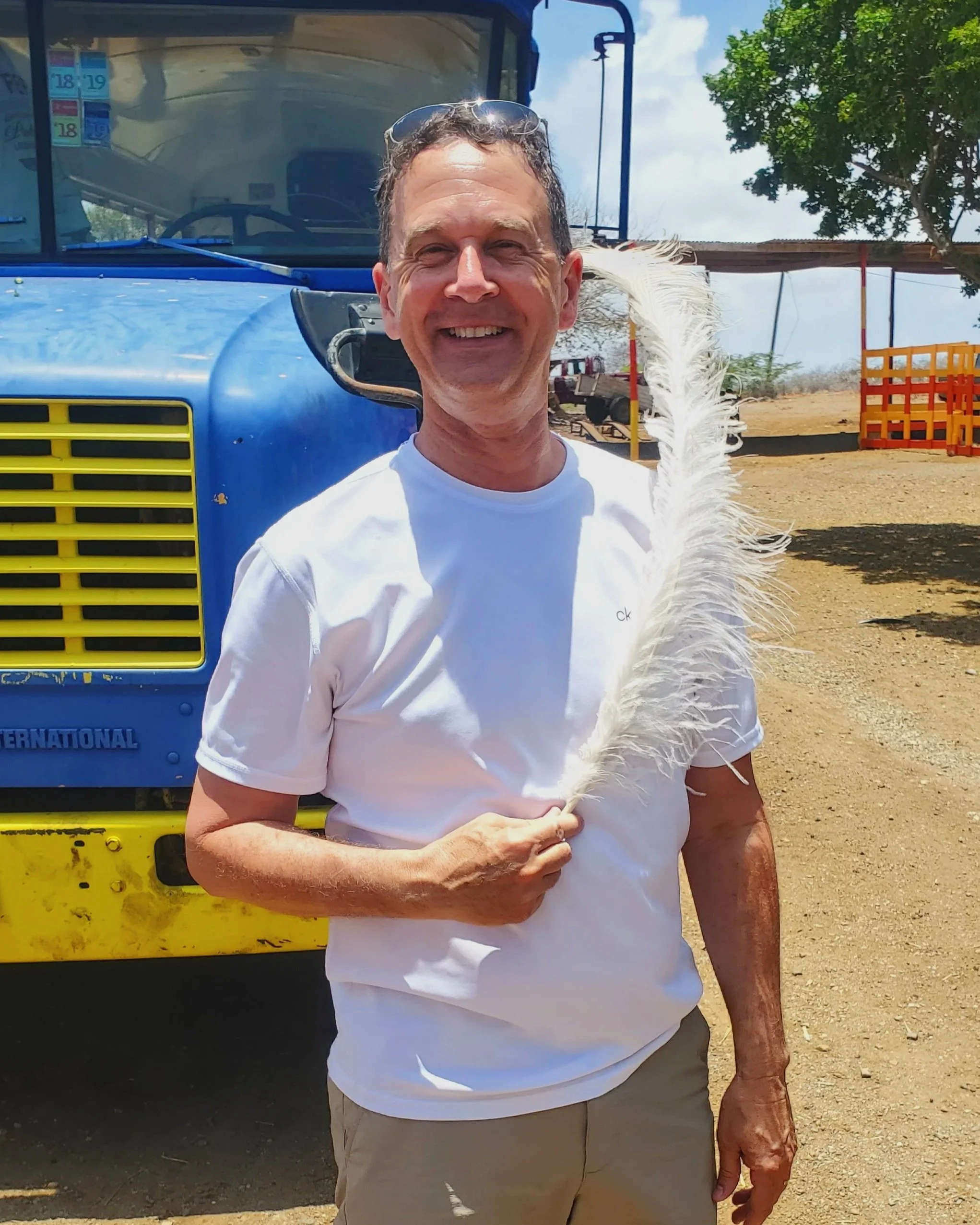
At our last stop we take turns standing on a real (unfertilized) ostrich egg! The eggs weigh three pounds; if they can hold up under the weight of these massive birds, they can also hold a person!
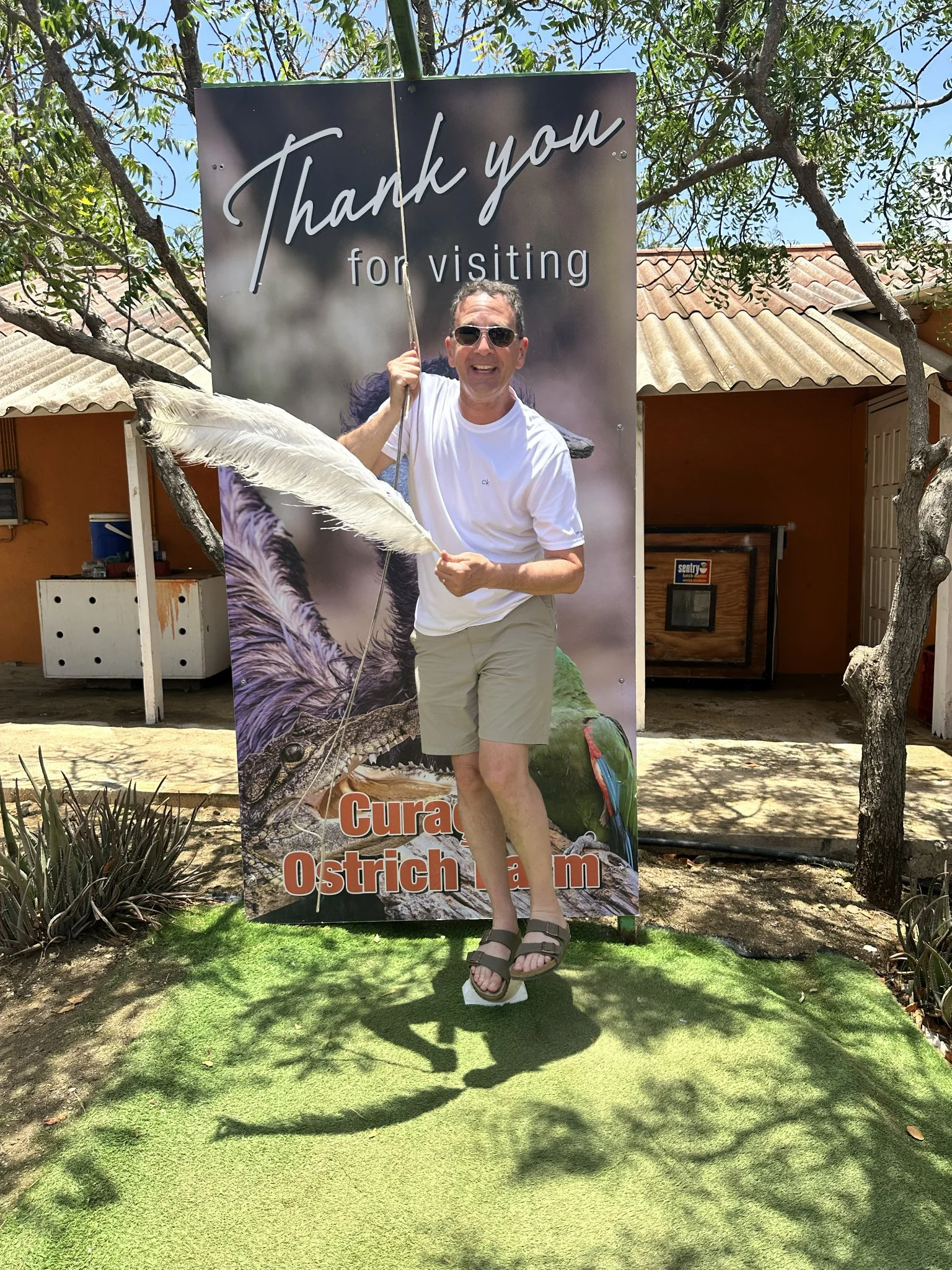
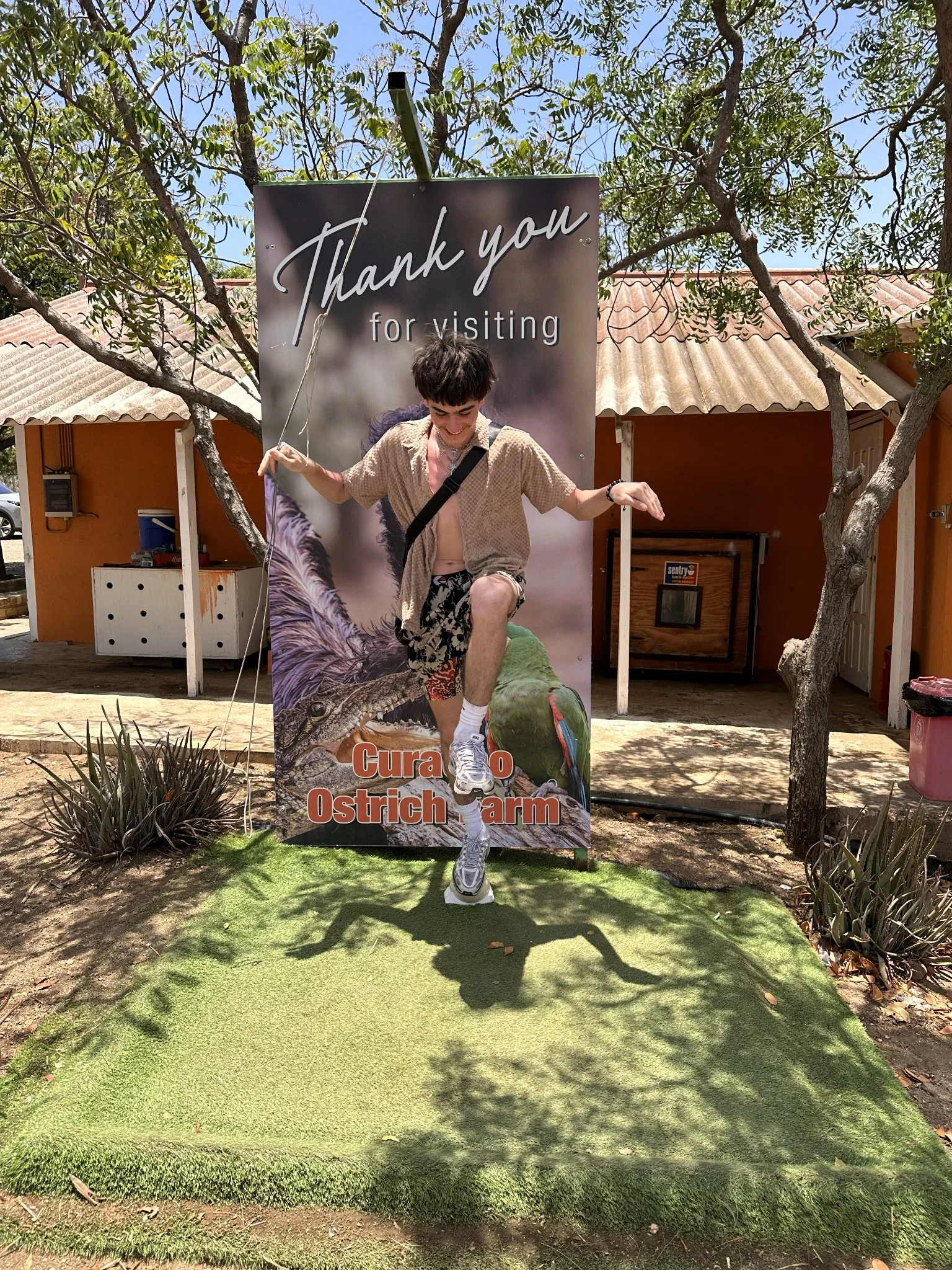
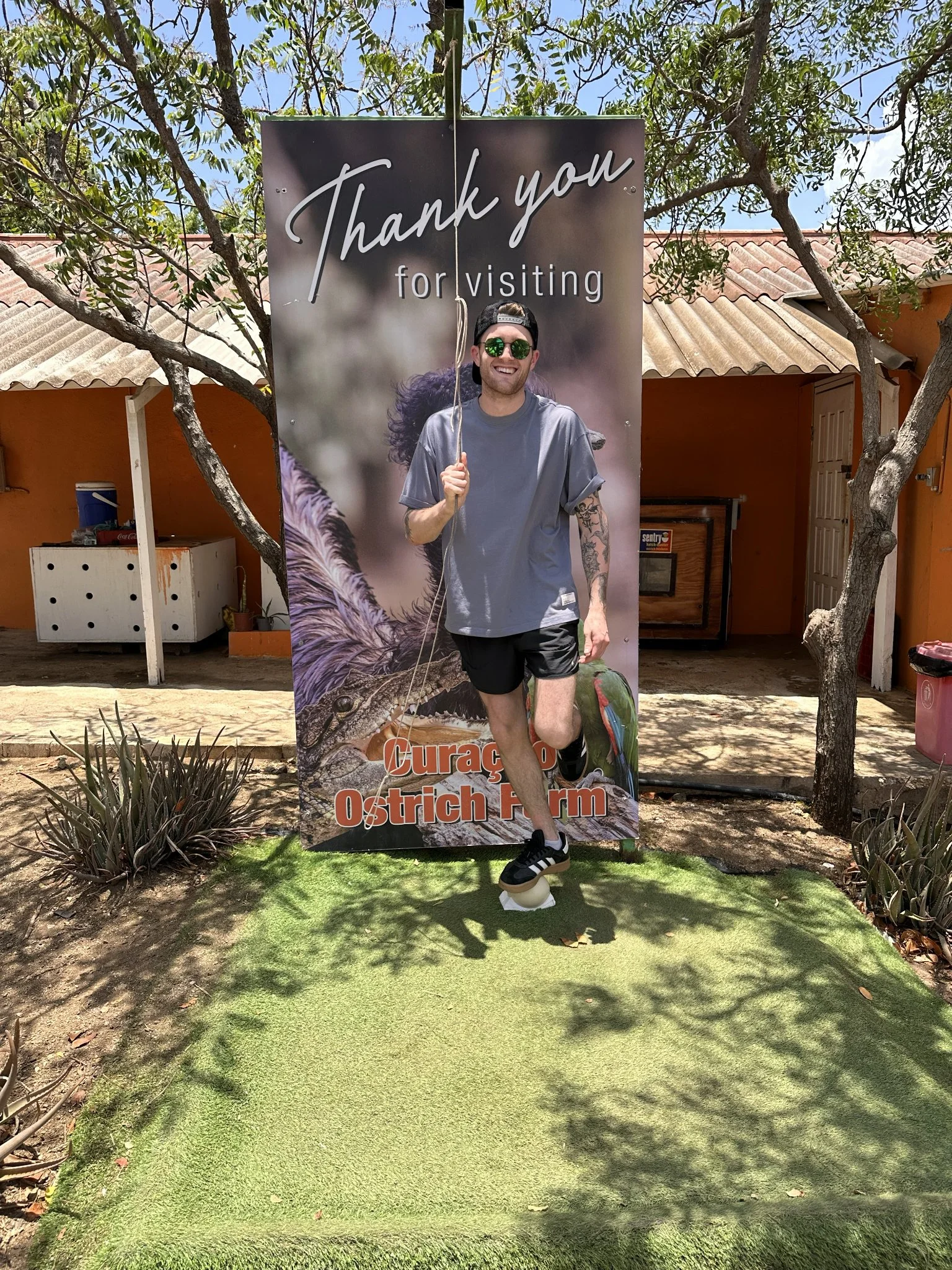
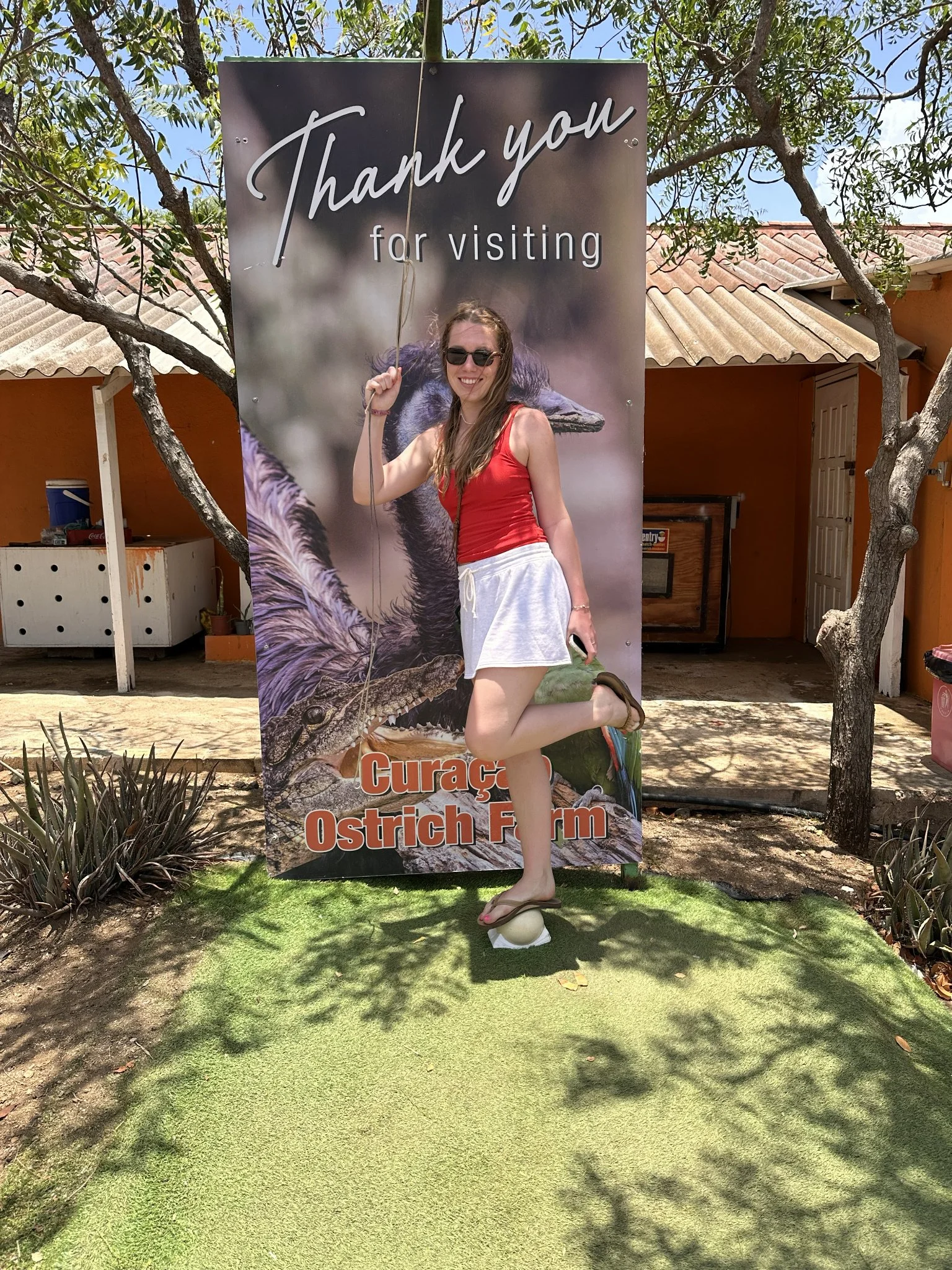
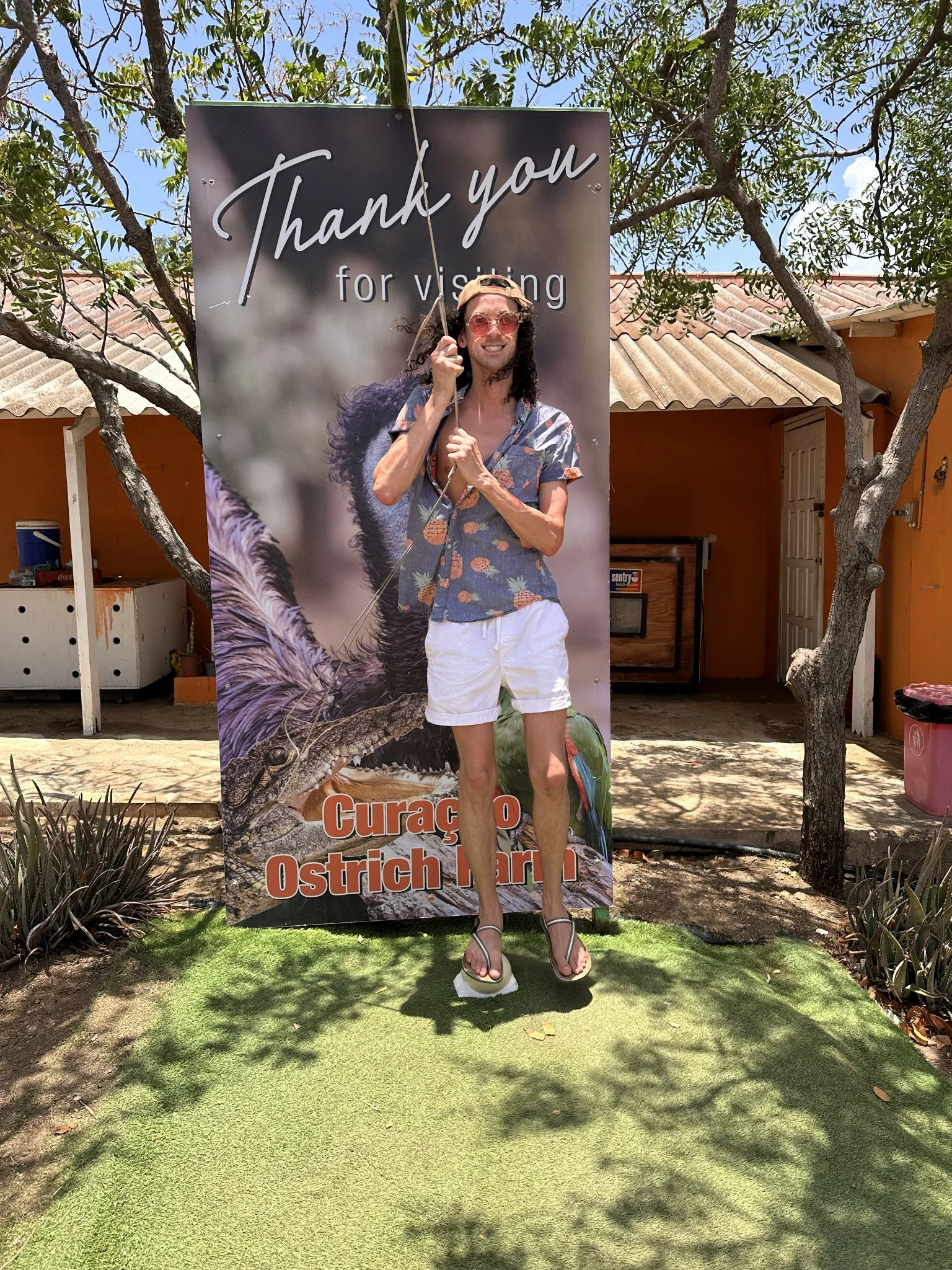
Although the farm doesn’t sell ostrich meat or have ostrich rides anymore, I think people walk away and feel good knowing the animals are treated better this way.
Serenity Now
Back at the condo, I review my snorkeling footage thus far; it’s disappointing. The fast-paced, jumpy videos could make you sea-sick.
There’s nothing planned for the rest of the day, so I head down to Mambo Beach to try again…
The sun shines on my back, cool water glides through my fingertips.
Threads of sunbeams dance across the soft ocean floor.
The ocean current rocks me with wide, formless arms, as sloshing sounds rumble off rocks, coral and crevices alike.
A school of fish swims by; at arm’s length away, you think you can touch them.
Here, I can finally drop into the present moment; the slow-paced underwater environment suspends stimulation and calms my nervous system.
It’s a much-needed sanctuary from the noises and distractions of the outer world.
I realize it’s not about shooting better snorkeling videos – it’s about embodying the stillness the ocean has to offer.
When you stop entertaining the incessant bombardments of consumption, you give the real you a chance to emerge.
Only from stillness can one ignore temptations and choose a meaningful life.
The buoyant, ion-charged saltwater activates my body’s stagnant energy.
Emerging onto land, I feel renewed – like a human being, not a human doing.
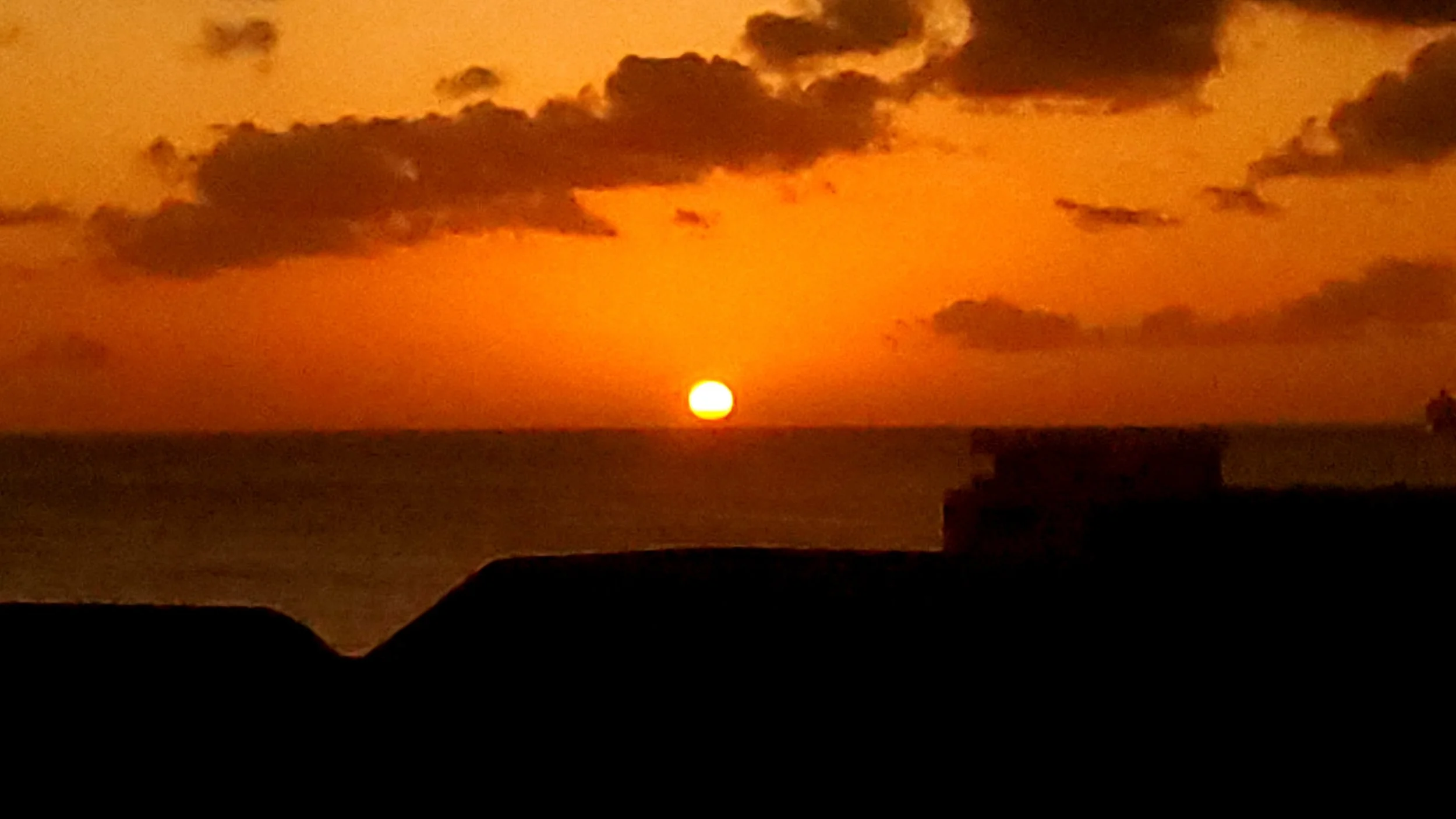
The quiet sun falls beyond the faded ocean horizon before I return to the condo.
“Authentic” Pizza & a Brawl
We park in Punda to look for restaurants, this time walking away from the hustle and bustle.
After a few random turns we find ourselves in a dense one-lane street packed with outdoor seating; the cars graze the tables as they go by — it’s that tight!
Here we settle on Mi Familia, an “authentic Italian restaurant.”
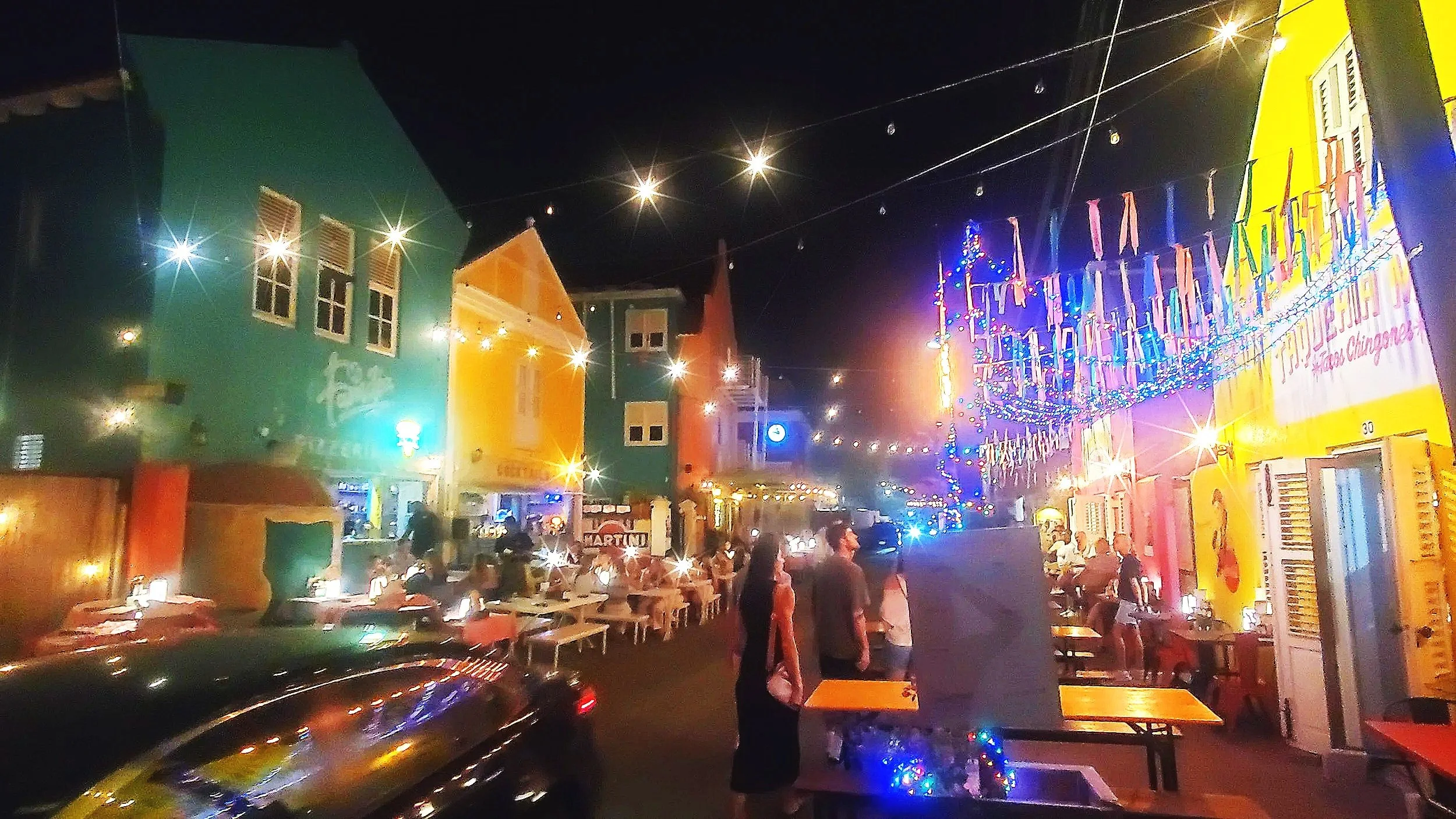
I’ve had my fair share of margherita pizzas in the US, so I’m interested in trying their “authentic” pie here.
Jacob, who was stationed in Italy for two years, keeps me in the dark; when my pizza comes out, it’s just a cheese pizza with three tiny spinach leaves on it! “That’s a standard margherita pizza in Italy” he says.
After dinner we remember the Honor Fight League is tonight. Jacob pulls up the livestream on his phone and we crowd around the small screen rooting for “Bryce’s guy,” Brian.
After the fight goes the length of the match, they declare Brian the winner.
Tomorrow’s our last full day in Curaçao, and it’s getting late now, so with heavy heads we drive back home.
Shete Boka National Park
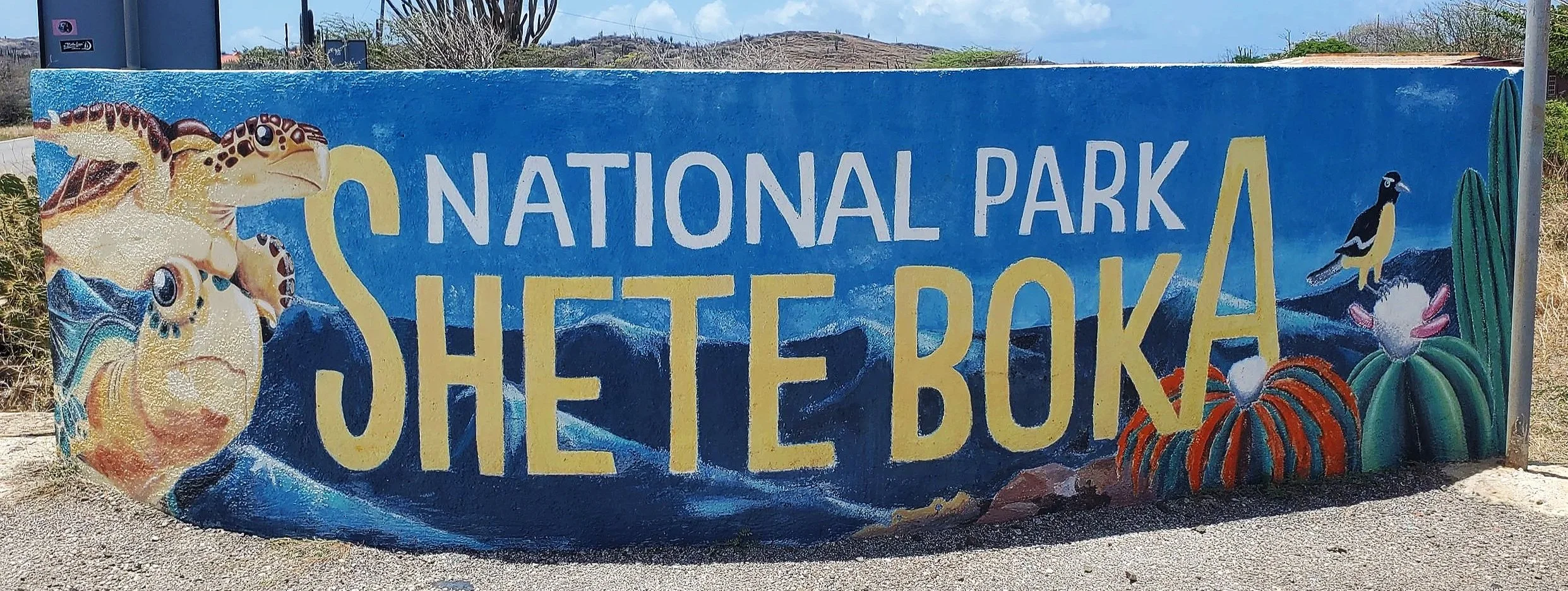
On our last full day, my parents, Bryce and I drive north to Shete Boka National Park, where aggressive waves from year-round “trade winds” slam into the shete boka (seven inlets).
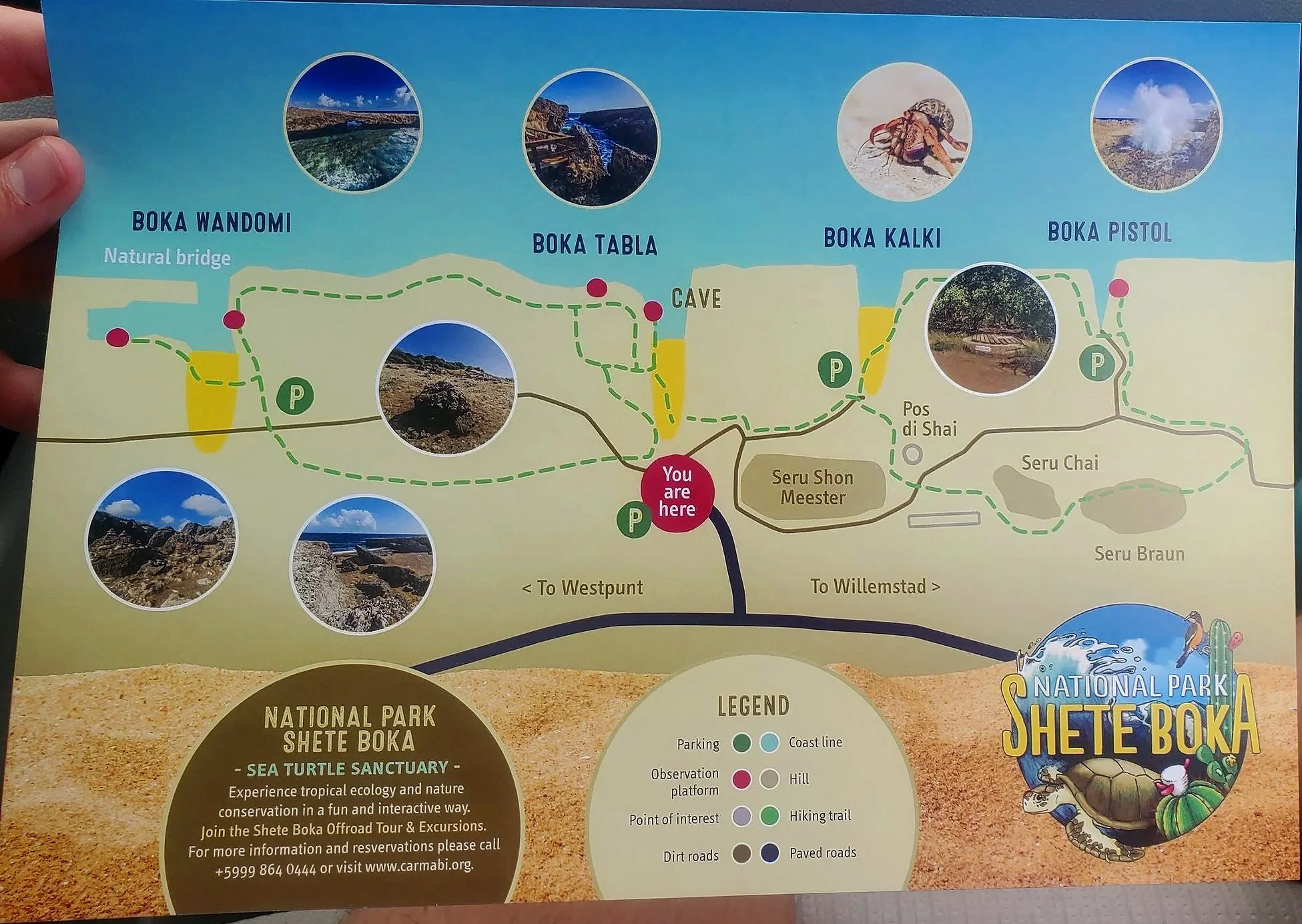
Lizards dart between sandy rocks, and cacti outcrops are abundant in the desert-like conditions. The paths to the inlets are one-lane dirt roads, but our van easily makes it up and over the small hills.
Boka Pistol
The main attraction of the park is Boka Pistol; when a wave rushes the narrow rocky cove, the water has nowhere to go but up. Like a “pistol” – in sound, force, and appearance – it shoots misty seawater high into the air, resembling a plume of vapor from a fired gun.
I’m lined up perfectly for a video – a huge wave slams the porous natural seawall and blasts water sky-high. Then, wind direction and water droplets align – I’m in the splash zone! Committing to the video, I hold my phone and wait for the thin wet wave to wash over me.
Boka Tabla
At Boka Tabla, down a narrow corridor with walls of rock and down a small opening into dank darkness, we find a cavern.
The blue-green waves bop and bounce off the shining walls and through the small opening; we’re lulled into nature’s never-ending sound bath, our trance broken only by the conversation of an approaching group.
On top of the cave, the open, flat tabla part, the infinite ocean meets the infinite sky at a midpoint on the horizon.
Boka Wandomi
The sun is peaking when we reach the natural bridge, Boka Wandomi. But the archway is obvious only if you’re perched at the right angle – give it more time for Mother Earth to carve it out.
I’m surprised to find my Earthrunner sandals holding up great on the sharp rocks that populate this plateau. But now the stinging UV rays are getting to us – we plug a beach into the GPS and make our way.
Coral Bit My Finger
Families and friends gather at Playa Cas Aboa; umbrellas line the expansive beachfront, and impressive boats float in the gentle water a stone’s throw from shore.
Feeling adventurous, I shoot an assortment of underwater plants waving back and forth with the current.
I try anchoring myself on a basketball-sized hunk of coral, but my hands slip on its hard, bony structure.
With fresh air I go again – this time, when I wrap my hands around the base of the coral, my finger rings out from a painful prick.
I return to the surface, a drop of blood oozes from the horseshoe-shaped punch in my left pointer finger.
I clench my fist and make a beeline for shore, a quick glance behind just to make sure no sharks are following me.
Across the beach at B Diving & Watersports a Dutch man bandages my finger. It’s deep, but his story is deeper:
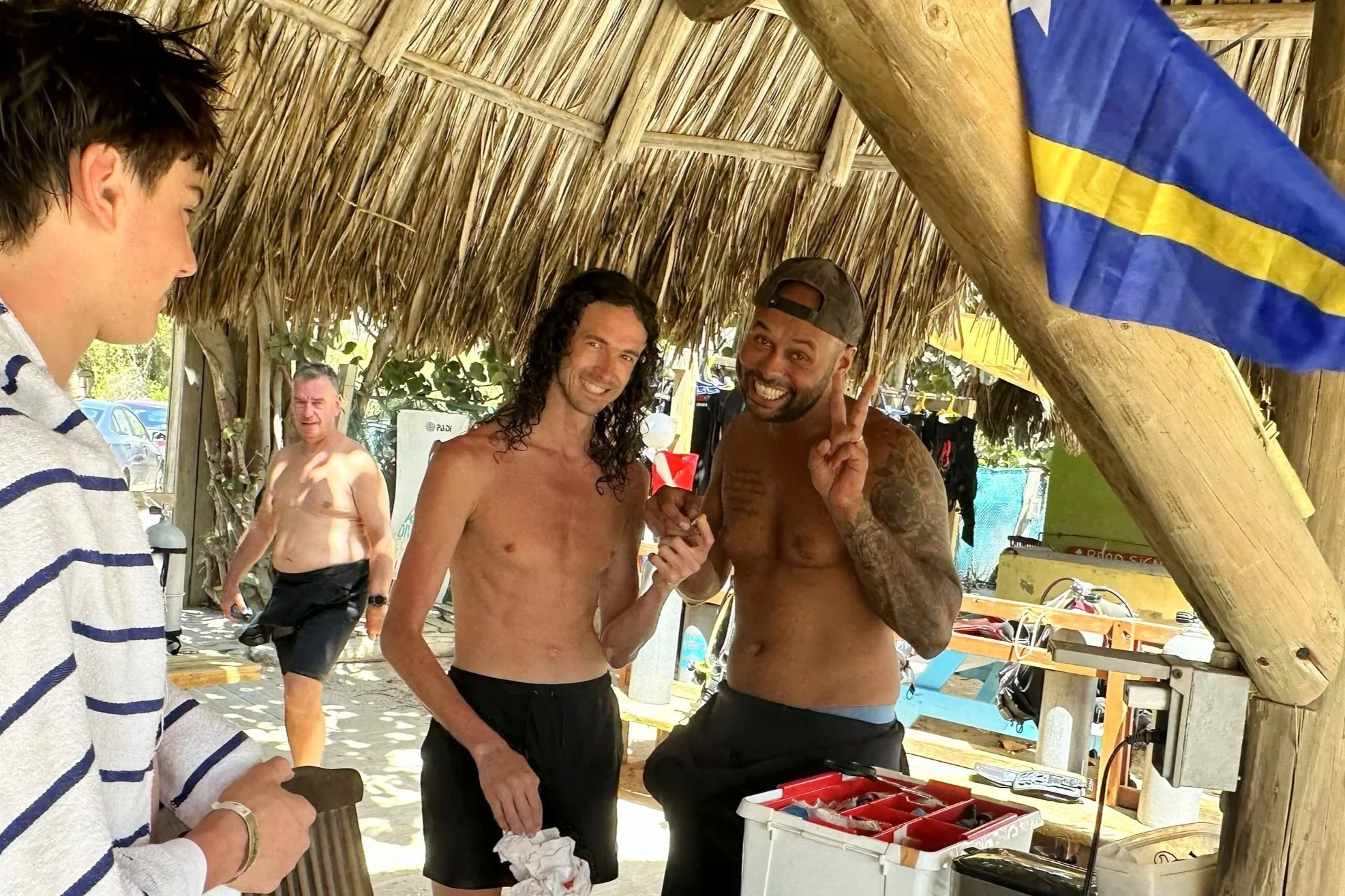
Once here on vacation, he saw a man walking out of the waves looking “way too happy.” He approached and struck conversation with the local diving instructor who then offered him a job on the spot where he now dives full-time.
After a finger condom joke and much thanks, we conclude our final beach day.
Curaçao Liqueur Distillery
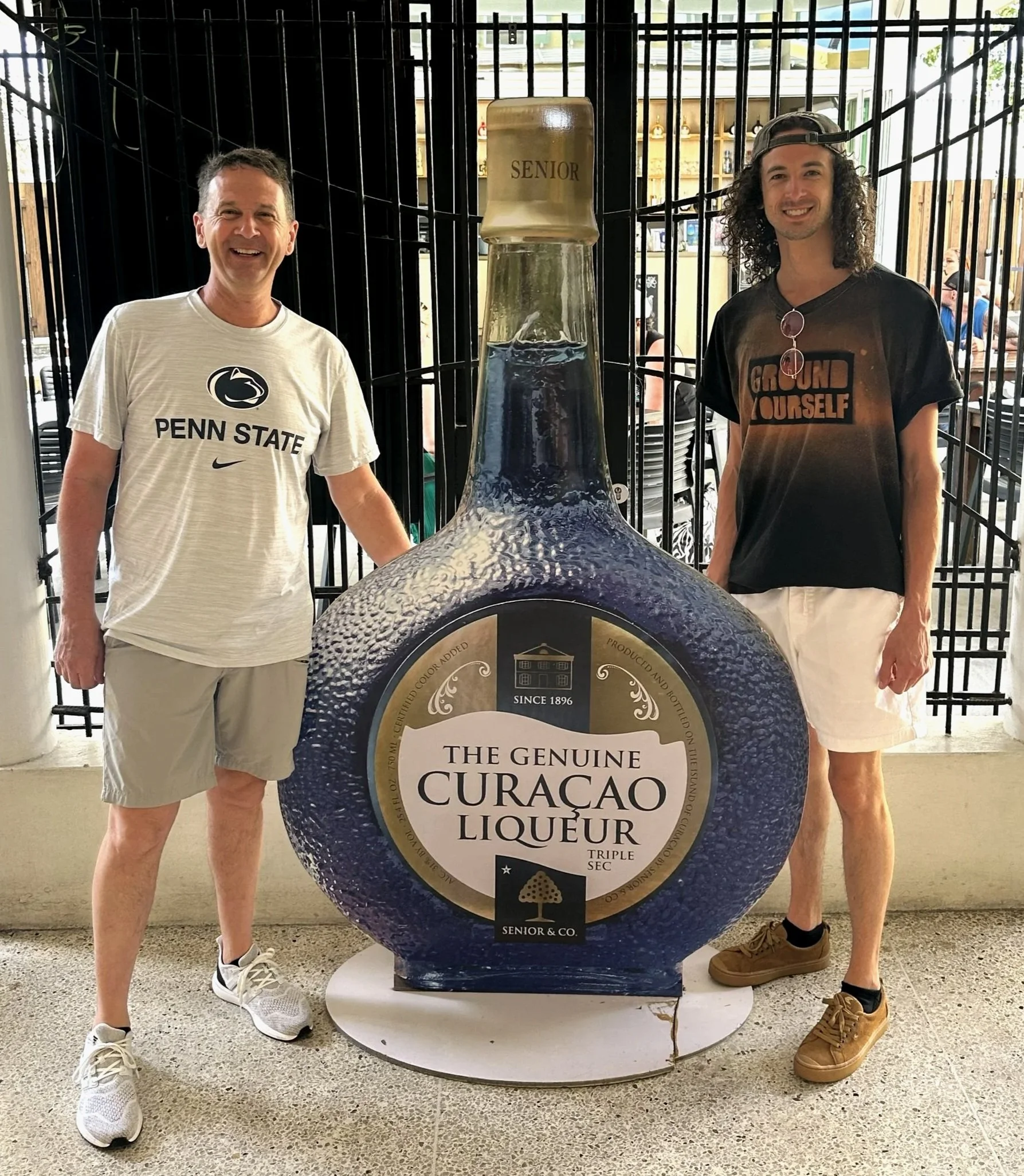
We don’t fly out until the afternoon, so we check out of Mambo Beach and check in to Curaçao Liqueur Distillery.
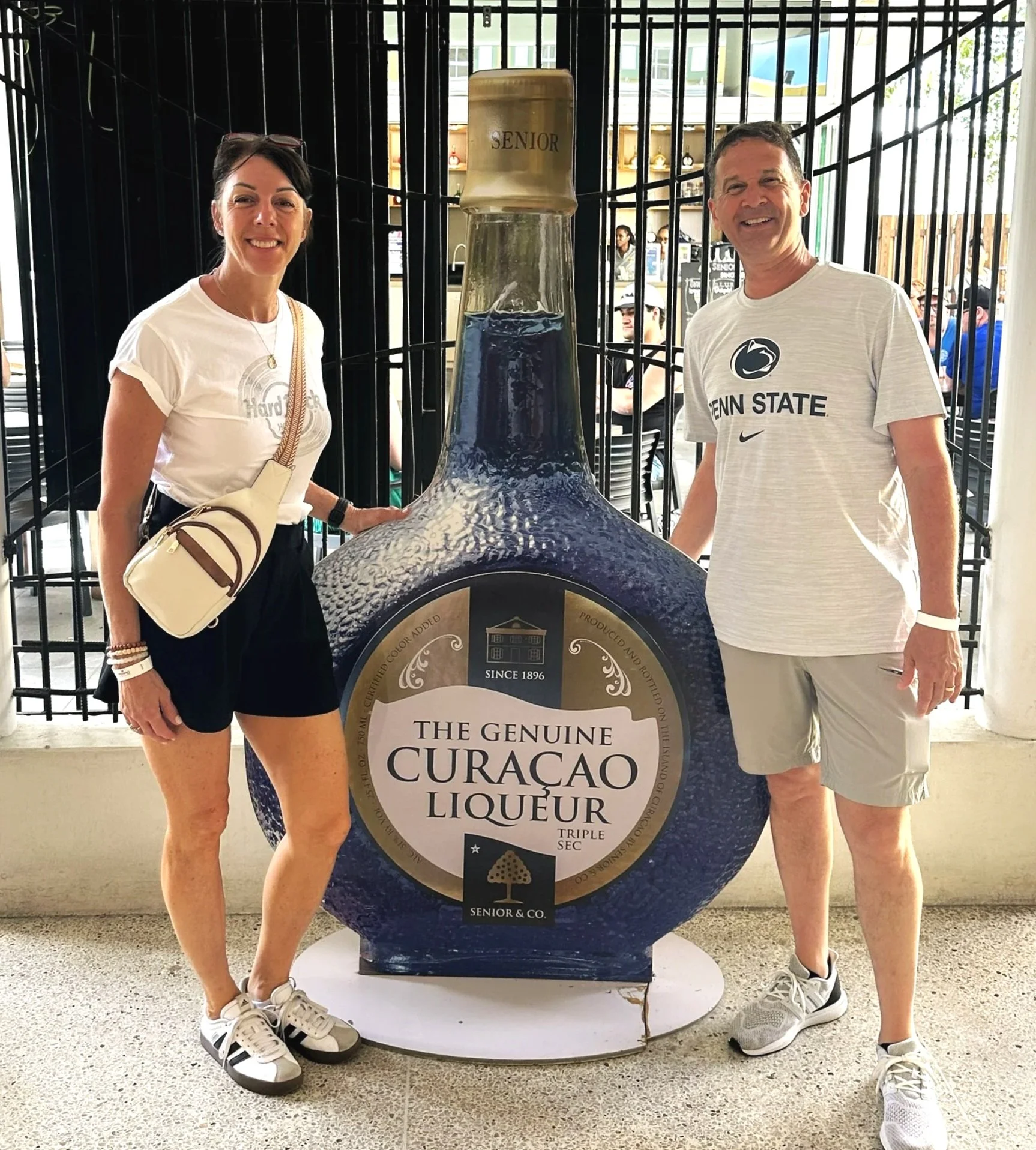
Home of the Blue Curaçao drink, it’s more widely known than the island itself!
We wander the gift shop and outdoor patio until Genesis, our friendly and personable guide, starts the walking tour.
It all started with Valencia orange trees; Spanish explorers first brought them to this island for cultivation in the 1500s, but the dry, nutrient-deficient soil created small, unsavory “laraha”oranges – but the peels smelled good.
The best aroma comes before maturity, when the fruit is still green — Gen rips up some peels for us to smell and pass around.
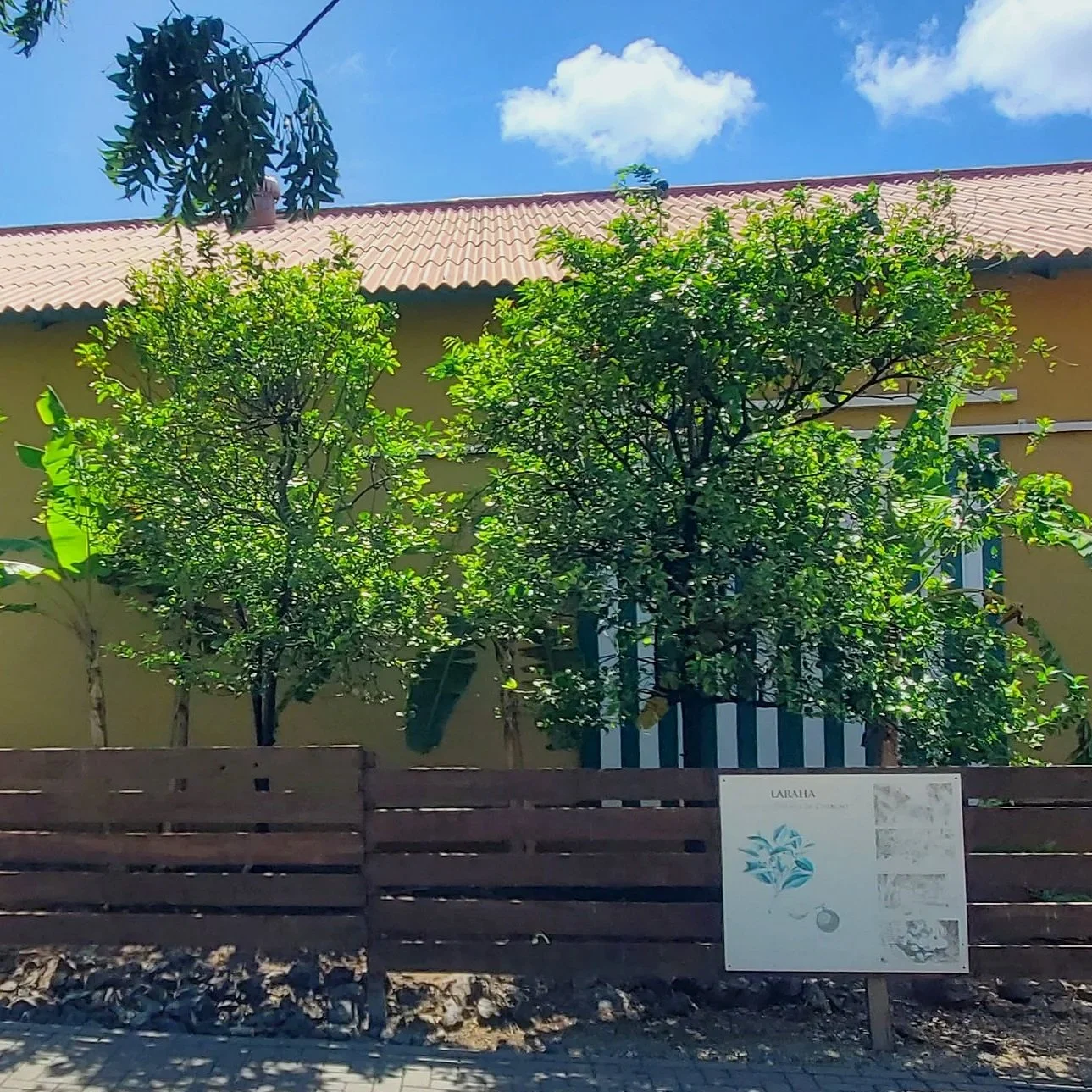
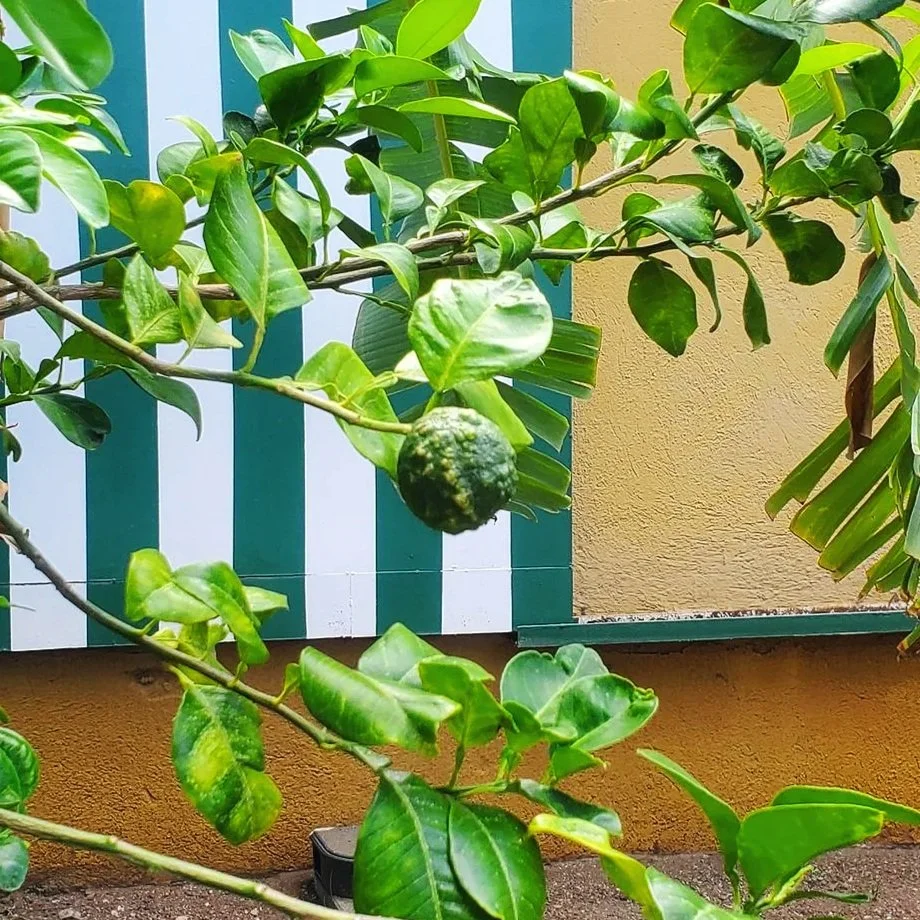
It takes three oranges to make one bottle of liqueur and the laraha orange trees produce fruit year-round, 80 of which are found at their orchard in the south of the island.
The first commercial use of the dried orange peels started in 1896, when Jewish founders of local drugstore “Botika Excelsior” used them first as an ingredient in a digestive drink (apéritif).
Their drink has since evolved into a citrusy orange 31% triple sec liqueur.
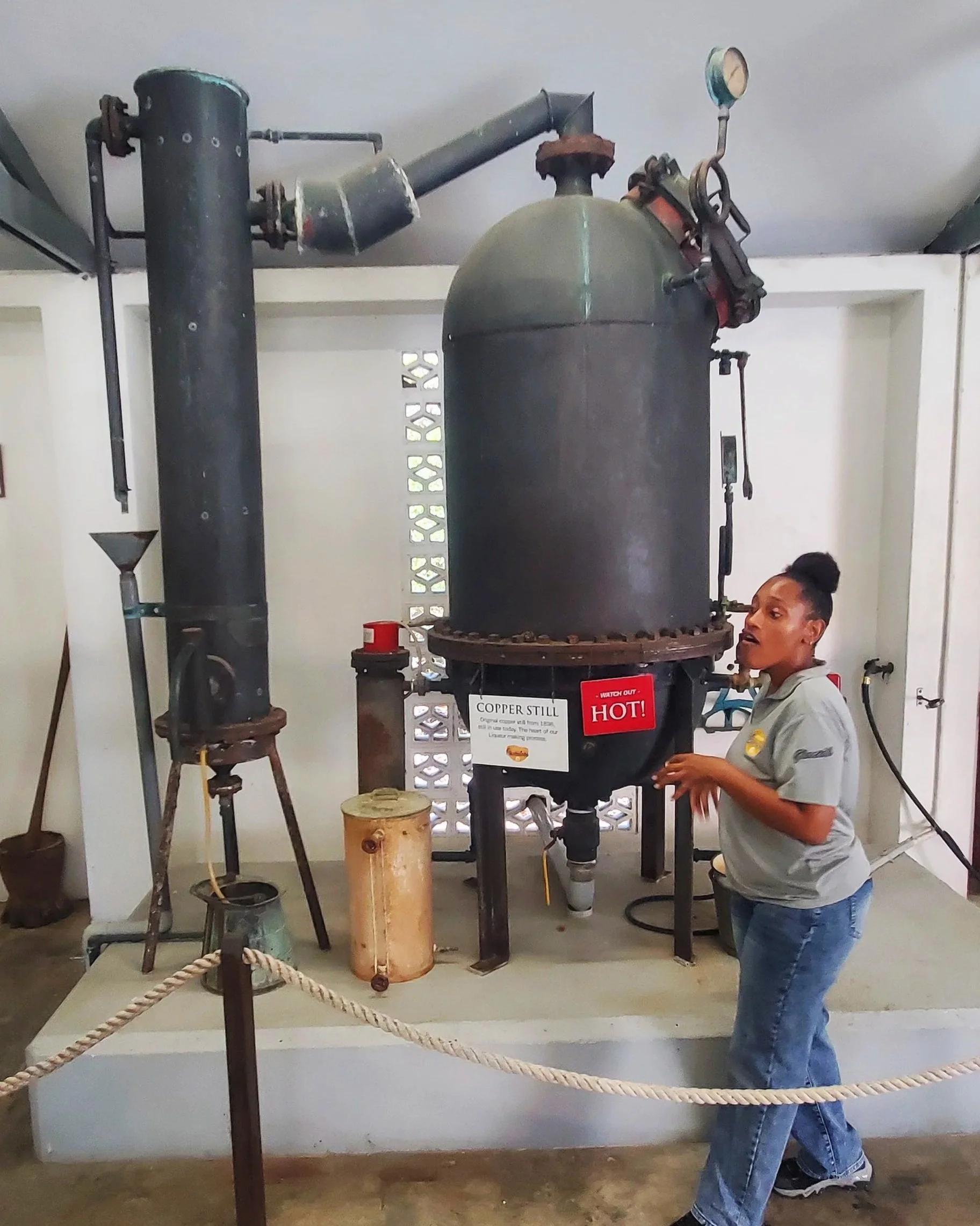
To make the liqueur in bulk, they brew orange peels in a cloth bag, just like a big cup of hot tea – but instead of simmering in water, they simmer in 96% sugarcane-based alcohol for 10 days.
We’re blown away when Gen tells us they’ve been using the same copper still for 120 years!
“Blue Curaçao”
The alcohol naturally comes out clear, but in the 1950s they added food coloring – “Blue Curaçao” has since exploded in popularity with its vibrant, visually appealing tropical drinks.
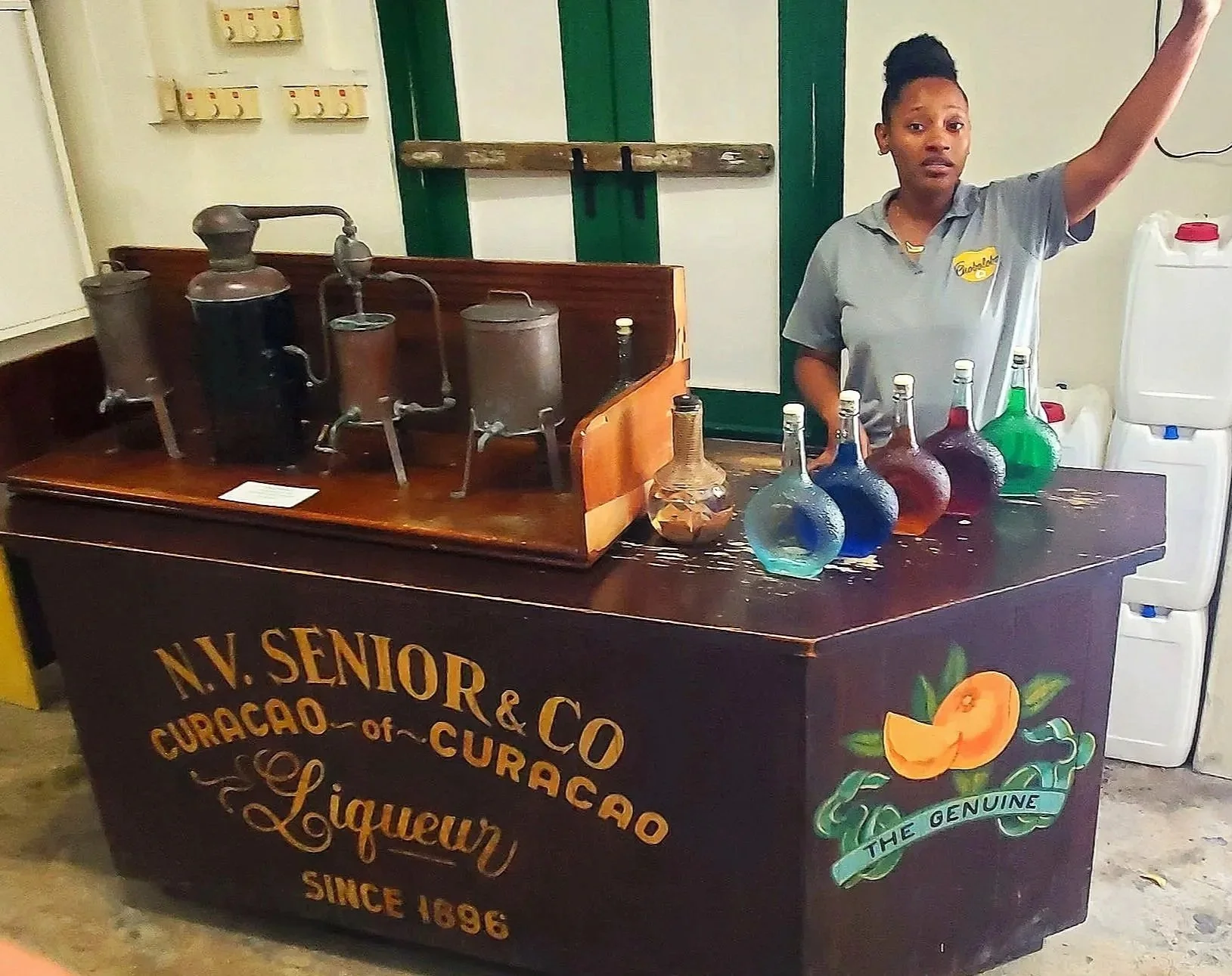
The blue represents the water surrounding the island, but other colors highlight the island’s lesser-known characteristics:
Red: for the vibrant sunsets
Green: for the aloe and cacti
Yellow: for the bright sun, even after a rainy day
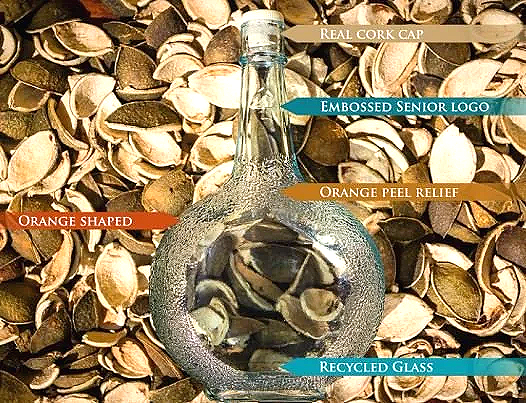
My favorite part is when Gen tells us about their bottles; more than just recycled glass, imported cork, and a shrink-wrap cap, a long stem leads to the round, textured body – the bottle represents a laraha orange hanging from its stem.
We try samples of the specialty liqueurs — coffee, rum raisin, chocolate, and tamarind — then have a drink on the landhuis (mansion).
Sitting at the picnic table, I think about their modest, laid-back business operation – the complete opposite of Casa Bacardí in Puerto Rico, a titan of industry.
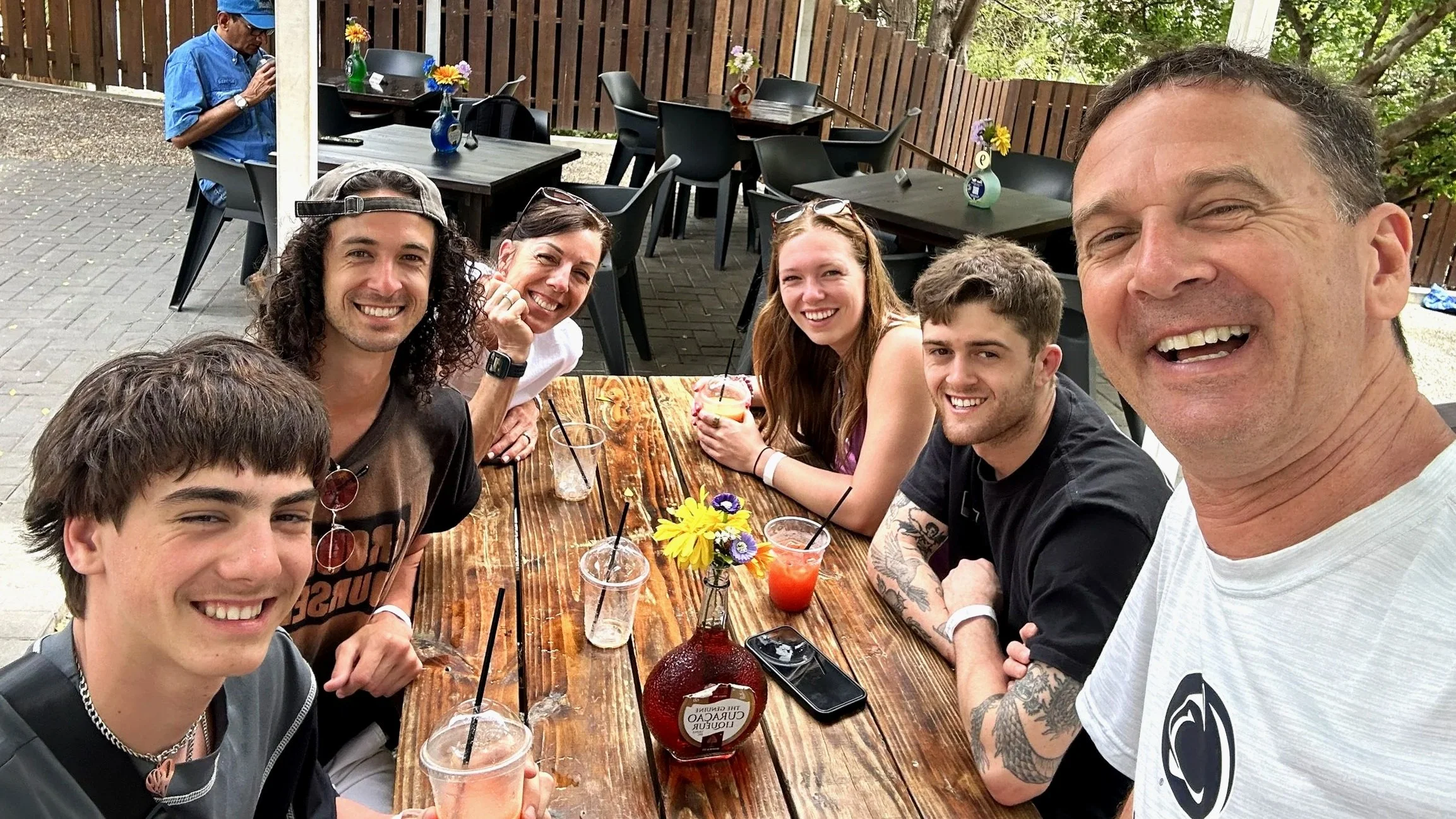
Finally, at long last, our time in beautiful Curaçao comes to an end…
Wrap Up
The Colorado ski trip melted before our eyes – but once we landed in Curaçao, I knew I could finally relax.
I found stillness wash over my being, a translucent re-birth of my soul among the soft waves.
Warm, sunny Curaçao vibes linger all the way home where it’s cold wind howls. I’m in shorts and a t-shirt, but I’m just grateful for an awesome family trip to Curaçao!
